In the contemporary home, navigating the maze of cables needed to power our myriad devices and appliances can be daunting. From high-demand kitchen essentials to a growing collection of smart gadgets, every electrical connection plays a critical role in daily life. This guide will demystify the world of “charging cables” and “power cords,” explaining the crucial differences, essential features, and top choices to ensure your large household runs efficiently and safely. Understanding these vital links to power is key to optimizing performance and protecting your valuable electronics.
Charging Cables and Power Cords: An Essential Overview
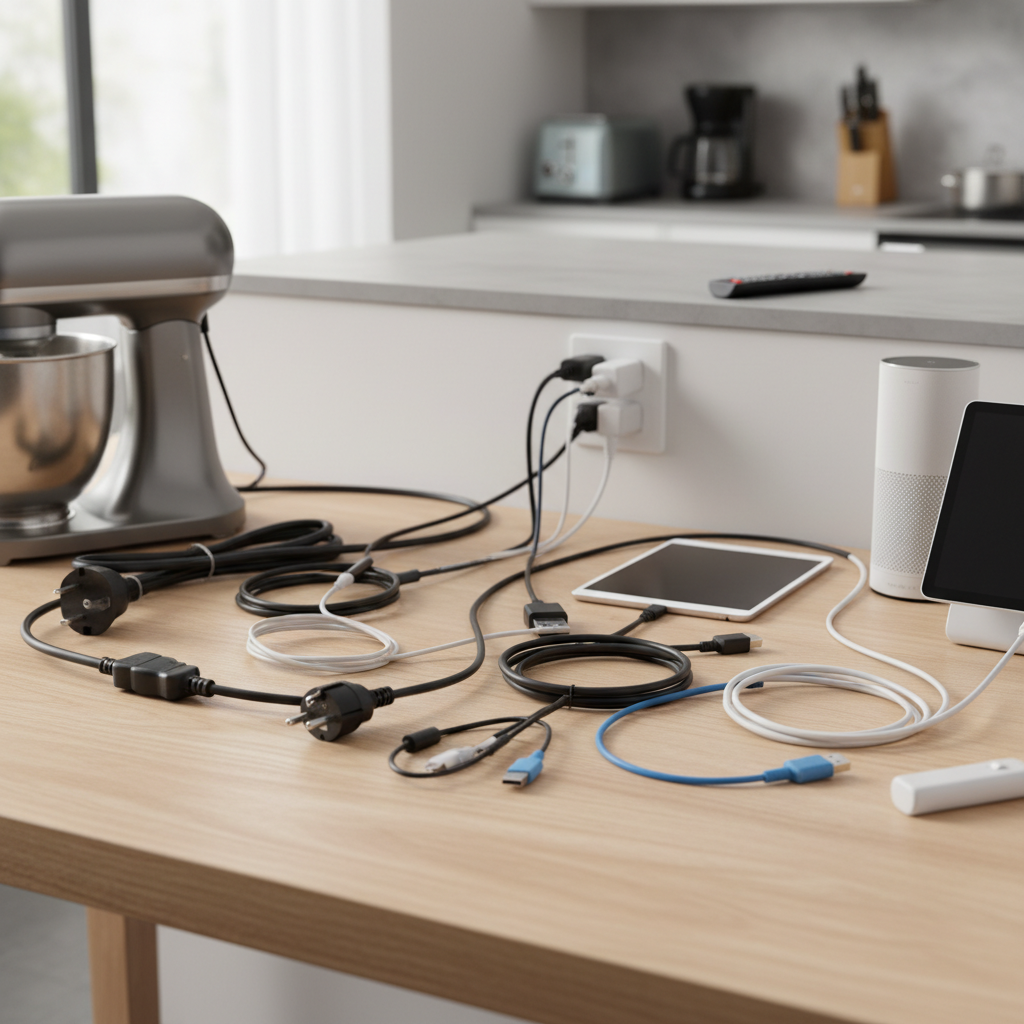
In a large household, the term “cable” encompasses two primary categories: heavy-duty power cords designed for fixed, high-wattage appliances and versatile charging cables for portable electronic devices. While both deliver electricity, their design, specifications, and safety considerations differ significantly. Properly understanding each type ensures optimal functionality and prevents potential hazards.
For large household appliances such as refrigerators, washing machines, dryers, and air conditioning units, the correct power cord is paramount. These cords are built to safely transmit high electrical currents and typically feature a thicker gauge wire, which dictates the amount of power it can safely carry. Common specifications include 14 AWG for appliances up to 15 amps and 1875 watts, or even 10 AWG for higher-demand equipment, sometimes extending up to 100 feet without significant power loss. [cite: 1, 2, 3 from search 1] These cords often come with 2-prong (ungrounded) or 3-prong (grounded, NEMA 5-15) plugs, with specialized configurations like NEMA 14-30P for dryers. [cite: 3 from search 1, 2 from search 4] Safety certifications like UL (Underwriters Laboratories), ETL (Intertek), or CSA (Canadian Standards Association) are critical indicators of adherence to strict safety guidelines. [cite: 1 from search 1, 4 from search 4]
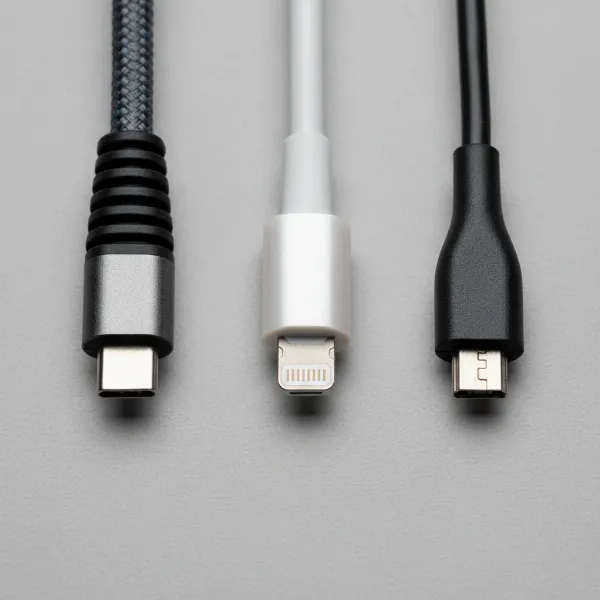
Conversely, charging cables are primarily designed for smaller, portable devices within the household, including smartphones, tablets, laptops, smart home hubs, and rechargeable small appliances like robot vacuums. These cables facilitate both power delivery and data transfer. The most common types you’ll encounter are USB-A, USB-C, Lightning, and Micro USB, each catering to specific device ecosystems and offering varying levels of charging speed and versatility. The evolution of charging technology means that many modern cables support fast-charging protocols like Quick Charge or USB Power Delivery (PD), significantly reducing the time it takes to power up devices.
Key Factors When Selecting Cables for Your Home
Choosing the right cable, whether a power cord for a major appliance or a charging cable for a smartphone, requires careful consideration of several factors. These elements directly impact performance, safety, and the longevity of both the cable and your connected devices. Investing time in selecting appropriate cables can prevent frustrating malfunctions and costly replacements.
Material and Durability of Cables
The materials used in a cable’s construction are fundamental to its durability and safety. For power cords, robust insulation is key. Vinyl insulation is common, with designations like SJTW indicating hard service, weather resistance, and suitability for outdoor applications. A thicker jacket protects the internal wires from abrasion, moisture, and temperature extremes. [cite: 1, 2 from search 2]
For charging cables, durability largely depends on reinforced stress points, internal wiring quality, and the outer sheath. High-quality cables often feature:
- Nylon or Kevlar braiding: This woven exterior resists fraying, tangling, cuts, and general wear and tear, significantly extending the cable’s lifespan. [cite: 1, 2, 3 from search 3]
- Reinforced connectors: The points where the cable meets the connector are common failure points. Durable cables use metal housings and flexible strain relief to absorb bending stress, preventing internal wire damage. [cite: 1, 3 from search 3]
- Premium internal components: Better quality copper cores ensure efficient power transfer and resist degradation over time. Smart internal resistors and chipsets regulate power flow, protecting devices from overheating or voltage fluctuations. [cite: 1 from search 3]
|
Our Picks for the Best Charging cable in 2026
As an Amazon Associate I earn from qualifying purchases.
|
||
| Num | Product | Action |
|---|---|---|
| 1 | LISEN USB C to USB C Cable, 240W C to C Cable Fast Charging [6.6FT, 2 Pack] Type C Charger Fast Charging USBC to USBC Cable for iPhone 17 16 15 Pro Max iPad MacBook Neo Air Pro Samsung S26 S25 Ultra |
![Check LISEN USB C to USB C Cable, 240W C to C Cable Fast Charging [6.6FT, 2 Pack] Type C Charger Fast Charging USBC to USBC Cable for iPhone 17 16 15 Pro Max iPad MacBook Neo Air Pro Samsung S26 S25 Ultra on Amazon](https://reviewasc.com/wp-content/plugins/amazon-tables/assets/images/buy.png)
|
| 2 | Durcord USB C Cable, Upgarded 2Pack 10ft Fast USB Type C Charging Cable for Android/Phone/Pad/Laptop, Type C Charger Braided USB Cable Compatible withi Phone 17/16/15/Pro/Plus/Max/Sam.Sung-Silver |
|
| 3 | INIU USB C to USB C Cable, 240W Fast Charging Type C Charger Cord, Braided USBC Phone Charger Cable for iPhone 17 16 Pro Max Samsung S26 S25 Laptops MacBook Air 15 M3 iPad Switch [6.6ft+6.6ft Black] |
|
| 4 | Teeind USB Type C Cable Fast Charging, Tpc001 5 Pack(6Ft 3A) Braided C Charger Cables Compatible with Samsung S10e/note 9/s10/s9/s8 Plus/A80/A50/A20 |
|
| 5 | iPhone Charger 3 Pack 10 ft Apple MFi Certified Lightning Nylon Braided Cable Fast Charging Cord Compatible with iPhone 13 12 11 Pro Max XR XS X 8 7 6 Plus SE iPad and More |
|
| 6 | USB Type-C to A Cable 5pack 6ft Braided Fast Charging 3A Quick Charger Cord, 6 Foot Compatible iPhone 17/17 Pro/16e/16/15 Pro Max,Samsung Galaxy S10 S9 S8 Plus, Note 10 9 8, LG V50 V40 G8 G7(Grey) |
|
| 7 | Anker USB C to USB C Cable, Type-C 60W Fast Charging Cable (6 FT, 2Pack) for iPhone 17 Series, iPad mini 6 and More (Black) |
|
| 8 | LISEN USB C to USB C Cable, 5-Pack [3.3/3.3/6.6/6.6/10FT] for iPhone 17 Charger Cord, 60W C to C Cable Fast Charging for iPad, iPhone 16 15 Pro Max, Galaxy S25/S24 USBC to USBC Cable Gifts for Men |
|
| 9 | AINOPE USB to USB C Cable [2-Pack, 6.6ft] 3.1A Type C Charger Fast Charging, Right Angle USB C Cable for iPhone 17 Carplay Cable, Galaxy S10+ S10 S9, Note 10 9, LG V30, Moto, iPhone 16 15 Charger Cord |
|
| 10 | Anker Cable [2 Pack 6ft], USB A to USB C Cable for iPhone 17 Series,Samsung Galaxy S10 S10+, LG V30, Beats Fit Pro and More (Black). |
|
Proper care, such as coiling cables loosely, avoiding extreme temperatures, and unplugging by gripping the connector, can further extend their lifespan. [cite: 2, 4 from search 3]
Compatibility and Power Delivery
Matching the cable to the device and its power requirements is crucial for both power cords and charging cables.
For power cords, you must ensure the cord’s amperage and voltage ratings meet or exceed the appliance’s requirements. Using an undersized cord can lead to overheating and fire hazards. Large appliances typically require 14 AWG (15A/125V) or 12 AWG (20A/125V) cords, with specialized outlets demanding specific NEMA plug types. [cite: 3, 4 from search 1] It’s also vital to use grounded (three-prong) cords for high-powered devices like refrigerators and microwaves to prevent electrical shock. [cite: 3 from search 1]
For charging cables, compatibility extends beyond the physical connector type (USB-A, USB-C, Lightning, Micro USB). Modern devices utilize various fast-charging protocols:
- Quick Charge (QC): Developed by Qualcomm, widely used in Android devices.
- USB Power Delivery (PD): A universal standard, especially prevalent with USB-C, capable of delivering higher wattages for laptops and rapid phone charging.
- MFi (Made For iPhone/iPad): Apple’s certification program for Lightning cables ensures safety and full compatibility.
Choosing a cable that supports your device’s fast-charging protocol, combined with a compatible power adapter, can dramatically reduce charging times. [cite: 3, 5 from search 3]
Length and Design of Cables
The length and design of a cable affect both convenience and safety.
For power cords and extension cords, choosing the appropriate length minimizes clutter and voltage drop. Longer cords (e.g., 50-100 feet) require a lower gauge number (thicker wire) to safely carry the same amount of current as a shorter cord, due to increased electrical resistance. [cite: 4 from search 1] Flat-plug designs are beneficial for large appliances positioned close to walls, allowing furniture to sit flush without crimping the cord. Always ensure extension cords are rated for the intended use (indoor/outdoor) and never use them as a substitute for permanent wiring. [cite: 1 from search 4]
For charging cables, length is often a trade-off between convenience and charging speed. While a 10-foot cable offers flexibility, very long cables can sometimes slightly reduce charging speed due to resistance. [cite: 5 from search 3] Practical design features like magnetic connectors, LED indicators, or integrated cable organizers can enhance usability and longevity. Magnetic cables, for example, can offer quick, precise connections and reduce wear on device ports. [cite: 1 from search 3]
Comparing Common Charging Cable Types for Household Devices
Within a large household, you’ll likely encounter several types of charging cables, each designed for different devices. Understanding their unique characteristics helps in making informed choices for your various gadgets. The table below provides a detailed comparison of the most prevalent charging cable types.
Detailed Comparison Table
| Feature | USB-A Cable | USB-C Cable | Lightning Cable | Micro USB Cable |
|---|---|---|---|---|
| Pros | Widely compatible with older chargers/ports; affordable. | Reversible connector; faster charging (PD); versatile (data, video); growing adoption. | Proprietary Apple standard; robust design; MFi certified for quality. | Common on older Androids and accessories; inexpensive. |
| Cons | Not reversible; slower charging speeds; declining use in new devices. | Higher cost; some older devices not compatible. | Exclusive to Apple devices; higher cost than generic USB; prone to breaking if not MFi certified. | Not reversible; slower charging; less durable connector; becoming obsolete. |
| Durability | Varies significantly by manufacturer; basic versions often less durable. | Often features robust construction with braided options; strong connector. | Good durability, especially MFi certified cables with reinforced strain relief. | Often fragile connector, susceptible to damage; basic materials. |
| Compatibility | Connects to older power bricks and computers; output for various devices. | Universal for modern Android phones, laptops, tablets, smart home devices. | Exclusively for iPhones, iPads, and other Apple accessories. | Older Android phones, e-readers, headphones, various small electronics. |
| Power Output | Typically 2.4A (up to 12W) or less; some proprietary fast charging. | Up to 240W with USB PD 3.1; supports Quick Charge. | Up to 20W for fast charging iPhones; varies with device. | Up to 10W (5V/2A); some older fast charging protocols. |
Essential Buying Guide for Household Cables
A well-equipped household demands a thoughtful approach to purchasing cables. This involves identifying specific needs, trusting reputable manufacturers, and prioritizing safety standards. Following a systematic buying guide ensures that every cable you bring into your home is both effective and reliable.
Assess Your Household’s Cable Needs
Start by taking inventory of your home’s electrical landscape. Categorize your needs into two main groups:
- For Large Appliances (Power Cords): Identify appliances like refrigerators, washing machines, dryers, ovens, and air conditioners. Note their voltage, amperage, and wattage requirements, typically found on a label at the back or bottom of the unit. Consider the required length and if the existing cord is adequate or if a heavy-duty appliance extension cord is necessary. Remember, extension cords for large appliances should be temporary and match or exceed the appliance’s ratings in terms of wire gauge and capacity. [cite: 1 from search 4]
- For Portable Devices and Smart Gadgets (Charging Cables): List all smartphones, tablets, laptops, smart home devices (e.g., smart speakers, robot vacuums), and other rechargeable electronics. Determine the connector types (USB-C, Lightning, Micro USB) and whether fast charging capabilities are needed. Consider usage scenarios, such as bedside charging, car charging, or portable power bank use, to select appropriate lengths and durability features.
Reputable Brands for Cable Solutions
Choosing products from established brands significantly increases the likelihood of acquiring high-quality and safe cables.
For power cords and heavy-duty extension cords, look for brands known for electrical safety and durability. Examples include:
- Certified Appliance Accessories: Known for power cords specifically designed for major appliances.
- Woods, Hyper Tough, Lowe’s, Home Depot brands: Often offer a range of UL-listed heavy-duty extension cords. [cite: 1 from search 1, 2 from search 2, 4, 5 from search 1]
For charging cables, brands with a strong reputation for durability, fast charging, and device protection include:
- Anker: Widely recognized for high-quality, durable charging cables and accessories, often with nylon braiding and reinforced connectors. [cite: 2 from search 3]
- Aukey, Belkin: Other prominent brands offering reliable charging solutions.
- Volta, KEUTEK, Syllucid: Brands specializing in ultra-durable, often magnetic, charging cables with high bend lifespans and tensile strength. [cite: 1, 3, 4 from search 3]
“Investing in quality cables from reputable brands is not just about convenience; it’s a fundamental aspect of electrical safety and device longevity in any modern home.” – Admin of Reviewasc.com, Charging Cable Expert
Verifying Specifications and Safety Certifications
Before making a purchase, meticulously check the cable’s specifications and ensure it carries the necessary safety certifications.
For power cords, always confirm:
- Wire Gauge (AWG): Lower numbers mean thicker wire, capable of handling more current (e.g., 10 AWG is thicker than 14 AWG). Match this to your appliance’s power draw. [cite: 3 from search 1]
- Amperage and Voltage Rating: Must meet or exceed the appliance’s requirements.
- Safety Certifications: Look for UL Listed, ETL Listed, or CSA Certified marks, indicating independent third-party testing for safety standards. [cite: 1 from search 1, 4 from search 4]
For charging cables, verify:
- Power Delivery (PD) or Quick Charge (QC) support: If fast charging is desired, ensure the cable explicitly states compatibility.
- MFi Certification: For Lightning cables used with Apple devices, this certification guarantees compliance with Apple’s performance and safety standards.
- General Safety Certifications: Look for CE, FCC, and RoHS compliance, which indicate the product meets European, U.S., and hazardous substance directives, respectively.
- Construction Details: Check for reinforced stress points, braided exteriors, and robust connector materials.
Top Cable Recommendations for a Modern Household
Equipping your home with the right power and charging solutions ensures both efficiency and safety. Here are some top recommendations tailored for the varied needs of a large modern household.
For heavy-duty large household appliances, focus on high-gauge, UL-listed power cords or appliance-specific extension cords. A 14-gauge, 15-amp, 125-volt heavy-duty appliance extension cord with a grounded three-pronged design is a versatile choice for many washers, dryers, and refrigerators. These often feature durable vinyl insulation or SJTW jackets for enhanced longevity. Brands like Certified Appliance Accessories and Amazon Basics offer reliable options. [cite: 1 from search 1] For applications requiring even more power or longer runs, consider 12 or 10-gauge cords, particularly for outdoor use or high-demand tools. [cite: 4 from search 1] Ensure the length is suitable without being excessively long, which can lead to voltage drop.
For charging cables designed for your array of portable and smart home devices, durability and fast-charging capabilities are key.
- For USB-C devices (Android phones, modern laptops, smart home hubs): Look for nylon-braided USB-C to USB-C cables that support USB Power Delivery (PD) up to 60W or 100W, depending on your device’s needs. Brands like Anker, Aukey, or Volta Max Cables are excellent choices, often featuring reinforced connectors and high bend lifespans. The Volta Max Cable, for instance, offers magnetic connections and 6-in-1 compatibility for various devices. [cite: 1 from search 3]
- For Apple Lightning devices (iPhones, older iPads): Opt for MFi-certified Lightning cables with braided exteriors and robust strain relief. These ensure compatibility and durability beyond standard plastic cables. Anker’s PowerLine series or Belkin Boost Charge cables are highly recommended.
- For Micro USB devices (older Androids, e-readers, some accessories): While less common, durable Micro USB cables from Anker or KEUTEK can provide extended life compared to generic alternatives, with reinforced connectors to combat their inherent fragility.
Always prioritize safety certifications (UL, ETL for power cords; MFi, CE, FCC for charging cables) and match the cable’s specifications to your device’s power requirements to prevent overheating, damage, and ensure optimal performance.
Conclusion
Navigating the diverse world of power solutions for a large household means understanding the distinct roles of heavy-duty power cords for major appliances and versatile charging cables for portable electronics. By prioritizing durability through robust materials, ensuring compatibility with your devices’ power demands, and always verifying safety certifications, you can make informed choices that enhance efficiency and safety throughout your home. Investing in high-quality cables not only prolongs the life of your valuable appliances and gadgets but also provides peace of mind. What steps will you take today to upgrade your home’s cable infrastructure for a more secure and efficient future?
Frequently Asked Questions
What does “AWG” mean for power cords?
AWG stands for American Wire Gauge, which indicates the thickness of the wire. A lower AWG number means a thicker wire, capable of safely carrying more electrical current. For example, a 10 AWG cord is thicker and can handle more power than a 14 AWG cord.
Can I use any extension cord for a large appliance?
No, you should only use an extension cord that is specifically rated for appliances and whose amperage and wattage ratings meet or exceed the appliance’s requirements. Using an undersized cord can cause overheating and pose a fire hazard. Extension cords should also be for temporary use only. [cite: 1 from search 4]
What is MFi certification for charging cables?
MFi stands for “Made For iPhone/iPad,” which is Apple’s licensing program. MFi-certified Lightning cables have been tested and approved by Apple to ensure they meet the company’s performance and safety standards, providing reliable charging and data transfer for Apple devices.
How can I make my charging cables last longer?
To extend the life of your charging cables, avoid bending them sharply at the connectors, store them loosely coiled, unplug them by gripping the connector head (not the cable itself), and keep them away from extreme temperatures and moisture. Investing in cables with braided exteriors and reinforced stress points also helps. [cite: 2, 4 from search 3]
Is USB-C truly universal for charging?
USB-C is highly versatile due to its reversible connector and support for various protocols like USB Power Delivery (PD), allowing it to charge many devices from smartphones to laptops. While it’s becoming the industry standard, some older devices still use USB-A, Micro USB, or Lightning, so it’s not universally compatible with all electronics yet.