In today’s fast-paced world, keeping our devices powered is non-negotiable. From smartphones to smartwatches and tablets, the demand for efficient and convenient charging solutions has never been higher. For years, the trusty charging cable has been the ubiquitous method, but with advancements in technology, wireless charging pads have emerged as a sleek and increasingly popular alternative. This article delves into a comprehensive comparison between these two prevalent charging methods, exploring their nuances, benefits, and drawbacks to help you determine which option best suits your individual needs and lifestyle. Understanding the distinctions between charging cables and wireless pads is crucial for making an informed decision that enhances your daily tech experience.
Charging Technologies: Cables and Wireless Pads Explained
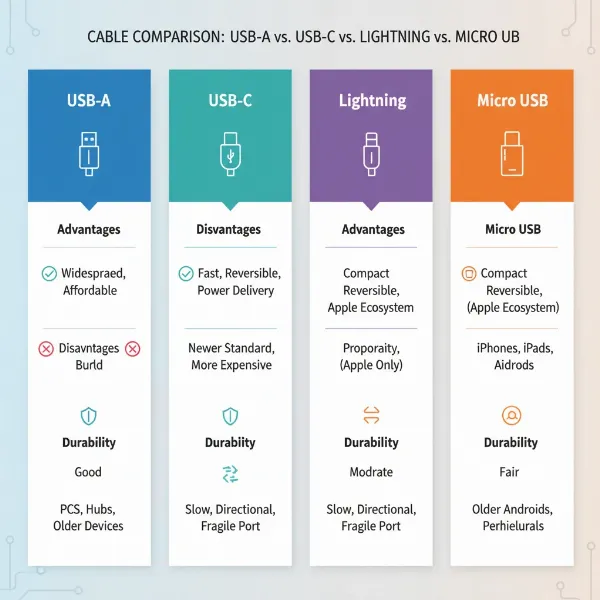
At its core, charging is about transferring power to a device’s battery. However, the mechanism through which this transfer occurs differs significantly between traditional charging cables and modern wireless pads. Charging cables utilize a direct physical connection, channeling electrical current from a power source directly into your device’s charging port. This method has evolved considerably, now encompassing various connector types such as USB-A, USB-C, Lightning, and Micro USB, each designed to fit specific device architectures. The strength of cables lies in this direct connection, which typically allows for high power delivery and efficient energy transfer.
Wireless charging, on the other hand, operates on the principle of electromagnetic induction, a technology that has been around for over a century but has only recently become practical for consumer electronics. Devices equipped with wireless charging capabilities, primarily those adhering to the widely adopted Qi standard, contain an induction coil. When placed on a wireless charging pad, which also houses an induction coil, an alternating magnetic field is generated. This field induces an electric current in the device’s coil, which is then converted into direct current to charge the battery. This “drop and charge” method eliminates the need for physical connectors, offering a seamless and often aesthetically pleasing charging experience. Both technologies play vital roles in modern tech ecosystems, each presenting unique advantages and considerations for users.
Key Factors in Choosing Your Charging Method
Deciding between a charging cable and a wireless pad involves weighing several crucial factors that impact performance, convenience, and overall user experience.
Charging Speed and Efficiency
|
Our Picks for the Best Charging cable in 2026
As an Amazon Associate I earn from qualifying purchases.
|
||
| Num | Product | Action |
|---|---|---|
| 1 | Teeind USB Type C Cable Fast Charging, Tpc001 5 Pack(6Ft 3A) Braided C Charger Cables Compatible with Samsung S10e/note 9/s10/s9/s8 Plus/A80/A50/A20 |

|
| 2 | Anker Cable [2 Pack 6ft], USB A to USB C Cable for iPhone 17 Series,Samsung Galaxy S10 S10+, LG V30, Beats Fit Pro and More (Black). |
|
| 3 | LISEN USB C to USB C Cable, 5-Pack [3.3/3.3/6.6/6.6/10FT] for iPhone 17 Charger Cord, 60W C to C Cable Fast Charging for iPad, iPhone 16 15 Pro Max, Galaxy S25/S24 USBC to USBC Cable Gifts for Men |
|
| 4 | INIU USB C to USB C Cable, 240W Fast Charging Type C Charger Cord, Braided USBC Phone Charger Cable for iPhone 17 16 Pro Max Samsung S26 S25 Laptops MacBook Air 15 M3 iPad Switch [6.6ft+6.6ft Black] |
|
| 5 | Durcord USB C Cable, Upgarded 2Pack 10ft Fast USB Type C Charging Cable for Android/Phone/Pad/Laptop, Type C Charger Braided USB Cable Compatible withi Phone 17/16/15/Pro/Plus/Max/Sam.Sung-Silver |
|
| 6 | USB Type-C to A Cable 5pack 6ft Braided Fast Charging 3A Quick Charger Cord, 6 Foot Compatible iPhone 17/17 Pro/16e/16/15 Pro Max,Samsung Galaxy S10 S9 S8 Plus, Note 10 9 8, LG V50 V40 G8 G7(Grey) |
|
| 7 | iPhone Charger 3 Pack 10 ft Apple MFi Certified Lightning Nylon Braided Cable Fast Charging Cord Compatible with iPhone 13 12 11 Pro Max XR XS X 8 7 6 Plus SE iPad and More |
|
| 8 | AINOPE USB to USB C Cable [2-Pack, 6.6ft] 3.1A Type C Charger Fast Charging, Right Angle USB C Cable for iPhone 17 Carplay Cable, Galaxy S10+ S10 S9, Note 10 9, LG V30, Moto, iPhone 16 15 Charger Cord |
|
| 9 | LISEN USB C to USB C Cable, 240W C to C Cable Fast Charging [6.6FT, 2 Pack] Type C Charger Fast Charging USBC to USBC Cable for iPhone 17 16 15 Pro Max iPad MacBook Neo Air Pro Samsung S26 S25 Ultra |
|
| 10 | Anker USB C to USB C Cable, Type-C 60W Fast Charging Cable (6 FT, 2Pack) for iPhone 17 Series, iPad mini 6 and More (Black) |
|
When it comes to charging speed, cables generally hold an advantage, particularly with the advent of fast charging technologies. Standards like USB Power Delivery (PD) and Qualcomm Quick Charge (QC) allow modern charging cables to deliver substantial wattage directly to compatible devices, often topping up batteries significantly in a short amount of time. For instance, a USB-C PD cable can deliver up to 100W or even more, enabling rapid charging for laptops, tablets, and smartphones.
Wireless charging, while constantly improving, typically operates at slower speeds. The inductive transfer process inherently involves some energy loss, often manifesting as heat, which reduces overall efficiency. While fast wireless charging pads capable of 15W or even 30W exist, these speeds are still generally less than what a high-wattage cable can provide. The trade-off for convenience often means a longer charging duration. Moreover, the efficiency of wireless charging can be impacted by factors like device alignment on the pad and the presence of phone cases.
Convenience and Portability
The convenience factor is where wireless charging pads truly shine. The “drop and charge” simplicity means you simply place your device on the pad, and charging begins. There’s no fumbling with cables in the dark, no worrying about damaging delicate charging ports, and a reduction in desk clutter. For many, this effortless interaction is a significant draw, especially for quick top-ups throughout the day.
However, portability is a more nuanced comparison. While the concept of a wireless pad itself is portable, the act of charging wirelessly on the go can be less practical. You need to carry the pad and a power source for it. A charging cable, on the other hand, is inherently more compact and easier to coil up and toss into a bag. When traveling, carrying a single, versatile charging cable can often be more convenient than a bulky wireless pad. Cables also allow you to use your device while it charges, offering flexibility that a stationary pad often cannot match.
Compatibility and Versatility
Charging cables offer broad compatibility across a vast range of electronic devices. With different connector types, you can find a cable for almost any gadget, from legacy Micro USB devices to the latest USB-C enabled smartphones, laptops, and accessories. Many modern cables are also designed to be versatile, supporting both data transfer and power delivery.
Wireless charging, primarily governed by the Qi standard, requires devices to have built-in inductive charging capabilities. While many flagship smartphones from major manufacturers (Apple, Samsung, Google, etc.) now support Qi wireless charging, not all devices do. Furthermore, the positioning of the device on the pad is crucial for efficient charging; misalignment can lead to slower charging or no charge at all. While there are universal Qi pads, their compatibility is limited to Qi-enabled devices, which means you’ll still need cables for non-Qi devices.
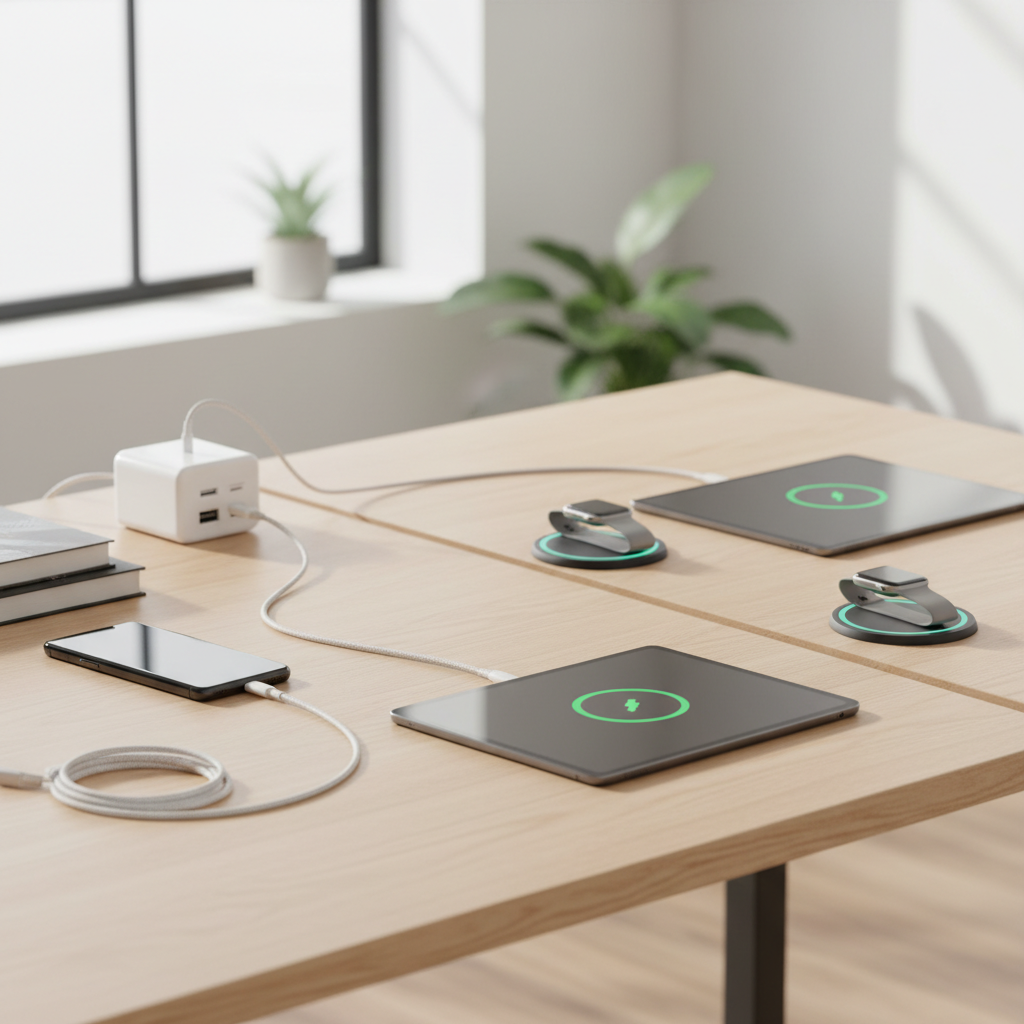
[image-1|charging-cable-vs-wireless-pad-comparison|A side-by-side comparison illustrating charging cables and a wireless charging pad in a modern, organized tech setup.|
Two distinct sections, one showcasing various charging cables (USB-C, Lightning, braided, short, long) neatly coiled and connected to devices, emphasizing direct connection. The other section features a sleek, minimalist wireless charging pad with a smartphone gently resting on it, illustrating effortless placement. The background is a clean, modern desk setting with soft, ambient lighting. The style is realistic and editorial.]
Durability and Longevity
The durability of both charging cables and wireless pads can vary significantly based on manufacturing quality and materials. Charging cables are susceptible to wear and tear at their most vulnerable points: the connectors and the strain relief where the cable meets the connector. Repeated plugging and unplugging, bending, and tangling can lead to fraying, internal wire damage, and connector issues over time. High-quality cables often feature reinforced connectors, braided nylon exteriors, and robust strain relief to enhance longevity.
Wireless charging pads, by nature, avoid the physical stress of repeated insertions and removals, which can extend the lifespan of your device’s charging port. The pads themselves are generally quite durable, as they don’t involve moving parts or flexible components prone to bending. However, they can still be affected by drops, spills, or excessive heat. While the absence of physical connection protects the device port, the pad itself needs to be robust.
Cost and Value
Generally, individual charging cables tend to be more affordable than wireless charging pads. Basic USB cables can be purchased for just a few dollars, making them a cost-effective solution for most users. Even high-quality, fast-charging cables from reputable brands are usually less expensive than a good wireless charging pad. This lower entry cost makes cables accessible to a wider audience and easier to replace if damaged.
Wireless charging pads, especially those offering faster charging speeds or multi-device capabilities, typically come with a higher price tag. A premium wireless pad from a known brand can cost significantly more than a quality cable. While the upfront investment is higher, the perceived value might come from the convenience and reduced wear on device ports. However, for budget-conscious consumers, cables often represent better immediate value.
Safety Considerations
Both charging cables and wireless charging pads, when manufactured by reputable brands and certified to safety standards, are generally safe to use. For charging cables, risks typically arise from using cheap, uncertified cables that may lack proper insulation, overcurrent protection, or robust construction, potentially leading to overheating, short circuits, or even fire hazards. Always look for certifications like UL, CE, FCC, or MFi (for Apple Lightning cables).
Wireless charging pads also incorporate safety features. Quality pads include foreign object detection (FOD) to prevent heating up metal objects placed on the pad, over-temperature protection to manage heat build-up, and over-voltage protection. However, the nature of inductive charging means some heat generation is inevitable during the process. Excessive heat can potentially reduce battery longevity over time, though modern devices and chargers are designed to mitigate this. Using certified Qi-enabled chargers from trusted brands helps ensure these safety protocols are in place.
“The choice between wired and wireless charging ultimately boils down to a personal balance of speed, convenience, and cost. While cables still dominate for raw power and efficiency, wireless charging offers an unparalleled level of seamless interaction that many users now prioritize.” – Dr. Elena Petrova, Lead Engineer, Advanced Power Solutions Inc.
Side-by-Side: Charging Cable vs Wireless Pad
Here’s a detailed comparison to highlight the key differences between these two prevalent charging methods:
Detailed Comparison Table
| Criterion | Charging Cable | Wireless Charging Pad |
|---|---|---|
| Charging Speed | Generally faster; excels with fast charging standards (PD, QC) | Slower overall; some fast wireless options available but typically less than wired |
| Convenience | Requires physical connection; can lead to fumbling, tangles | “Drop-and-charge” simplicity; no physical connection; reduces port wear |
| Portability | Highly portable; easy to coil and carry; can use device while charging | Pad itself adds bulk; less convenient for active use while charging on the go |
| Compatibility | Wide range of devices; specific port types (USB-C, Lightning, Micro USB) | Limited to Qi-enabled devices; requires specific alignment for optimal charge |
| Durability | Susceptible to fraying, connector wear, and internal damage over time | No physical port stress; robust pad design; less prone to wear from connection/disconnection |
| Cost | Lower entry cost; wide range of prices from basic to premium | Higher initial investment for quality pads, especially multi-device options |
| Efficiency | Higher efficiency; minimal energy loss during transfer | Lower efficiency due to energy conversion and heat generation; can be impacted by alignment |
| Safety | Safe with certified products; risks with uncertified, poorly made cables | Safe with certified products (Qi-certified); includes FOD, over-temp protection; some heat is normal |
Making Your Choice: A Buying Guide
Selecting the right charging solution requires a thoughtful evaluation of your specific needs, devices, and lifestyle.
Assess Your Device Needs
Start by identifying the devices you own. Do they all support wireless charging? If you have a mix of devices, a combination of both charging cables and wireless pads might be the most practical approach. Consider the importance of charging speed for each device. For a smartphone you need to quickly top up before heading out, a fast-charging cable might be essential. For an overnight charge by your bedside, a slower, more convenient wireless pad could be perfect. Also, think about how many devices you typically charge simultaneously. Multi-device wireless pads exist, but often a power strip with multiple USB ports for cables is more versatile for many gadgets.
Consider Your Lifestyle
Your daily habits and environment play a significant role. If you frequently travel or are often on the move, the compact nature and widespread utility of charging cables make them an indispensable choice. If you value a minimalist, clutter-free workspace or bedside table, a sleek wireless charging pad can be ideal, reducing the tangle of wires. For those who frequently pick up and put down their phone, the ease of wireless charging can be a game-changer. Conversely, if you often use your device while it’s charging, a cable provides the freedom of movement that a stationary pad cannot.
Look for Reputable Brands and Certifications
Regardless of whether you choose a charging cable or a wireless pad, always prioritize products from reputable brands and ensure they carry relevant safety certifications. For charging cables, look for brands like Anker, Belkin, UGREEN, or Amazon Basics, and check for certifications such as CE, FCC, RoHS, and MFi for Apple Lightning cables. These certifications indicate that the product meets specific safety and performance standards.
For wireless charging pads, seek out Qi-certified products from trusted brands like Belkin, Anker, Spigen, or Samsung. The “Qi” logo guarantees interoperability and adherence to the WPC (Wireless Power Consortium) standard, ensuring both safety and optimal performance with compatible devices. Investing in quality products might cost a little more upfront, but it provides peace of mind regarding safety, durability, and reliable performance.
Top Charging Cable vs Wireless Pad Options
In the diverse market of charging solutions, both cables and wireless pads offer compelling features depending on user priorities. For charging cables, look for those with durable construction like braided nylon, reinforced stress points, and universal compatibility with fast charging standards like USB Power Delivery. These cables often come in various lengths to suit different use cases, from short desk cables to long ones for reaching distant outlets.
When considering wireless charging pads, options range from compact single-device pucks to multi-device charging stands that can power a phone, smartwatch, and earbuds simultaneously. Key features to look for include higher wattage for faster wireless charging, a non-slip surface to keep devices secure, and a design that complements your living or workspace. Many pads also offer convenient stand functionalities, allowing you to view your phone screen while it charges. The best choices in both categories balance efficiency, durability, and user-friendly design.
Conclusion
The debate between charging cables and wireless charging pads isn’t about one being definitively superior to the other; rather, it’s about identifying which method aligns best with your individual needs and technological ecosystem. Charging cables continue to excel in sheer speed, efficiency, and universal compatibility across a broad range of devices, often at a lower cost. They are the workhorses of device power, ideal for rapid charging, data transfer, and active use while plugged in.
Wireless charging pads, conversely, offer unparalleled convenience and a sleek, cable-free aesthetic. They minimize port wear, reduce desk clutter, and provide a seamless “drop and charge” experience perfect for quick top-ups throughout the day. However, they generally come with a higher price tag, slower charging speeds, and require device compatibility with the Qi standard. Ultimately, many users find that a combination of both solutions offers the most robust and flexible charging strategy. What aspect of your daily charging routine do you find most challenging to optimize?
Frequently Asked Questions
Is wireless charging slower than wired charging?
Yes, generally, wireless charging is slower than wired charging, especially when comparing to modern fast-charging cables that utilize technologies like USB Power Delivery. While fast wireless chargers exist (e.g., 15W or 30W), they typically cannot match the wattage and efficiency of high-speed wired connections, which can deliver 60W, 100W, or more.
Does wireless charging damage phone battery?
While wireless charging can generate more heat than wired charging, modern smartphones and Qi-certified wireless chargers are designed with thermal management systems to prevent battery damage. Excessive heat is detrimental to battery longevity, but the heat produced by reputable wireless chargers under normal conditions is generally within safe limits and unlikely to significantly harm your phone’s battery over its lifespan.
Can I use any wireless charger with my phone?
You can use any wireless charger that supports the Qi standard with a Qi-enabled phone. The Qi standard is the most common for consumer electronics. However, for “fast wireless charging,” both your phone and the charger must support the specific fast-charging wattage (e.g., 15W). Also, ensure the charger is from a reputable brand to guarantee safety features and proper functionality.
Are charging cables or wireless pads safer?
Both charging cables and wireless pads are generally safe when using certified products from reputable brands. Risks primarily arise from uncertified or poorly manufactured products. For cables, this can mean faulty wiring or inadequate insulation. For wireless pads, issues might include lack of foreign object detection or poor heat management. Always look for safety certifications like Qi, CE, FCC, or UL.