In today’s interconnected world, a reliable charging cable is as essential as the device it powers. From smartphones and tablets to laptops and smartwatches, our daily lives revolve around staying charged and connected. But with an overwhelming array of options flooding the market, how do you distinguish a truly robust, efficient, and safe charging cable from a flimsy, slow, or even hazardous one? This comprehensive guide will navigate you through the intricate world of charging cables, helping you understand the critical factors that determine quality, performance, and longevity, ensuring your next purchase is an informed one.
Charging Cable: Overview and Essential Knowledge
A charging cable is more than just a wire; it’s a critical conduit for power and data, bridging your device to a power source or another gadget. Its significance has grown exponentially with our increasing reliance on portable electronics, making the choice of a quality cable paramount for optimal device performance and safety. Without a proper cable, even the most advanced charger or power bank cannot deliver its full potential, leading to slow charging, data transfer issues, or even damage.
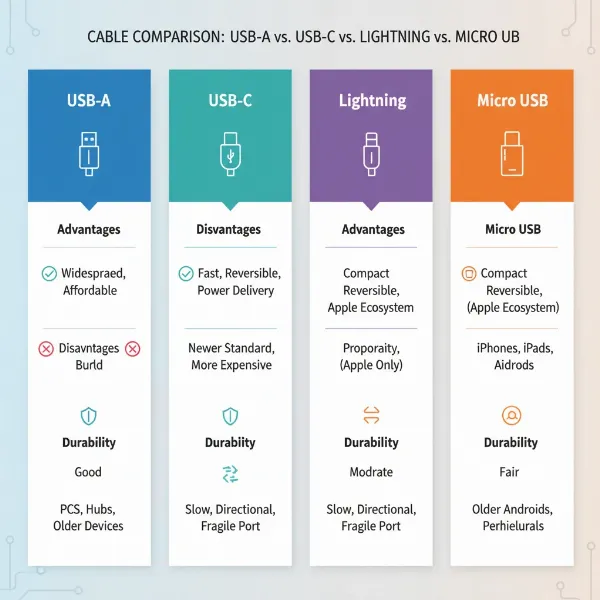
The market currently features several common types of charging cables, each designed for specific devices and functionalities. USB-A remains widely prevalent, primarily found on older chargers and computers, connecting to a variety of devices. USB-C, rapidly becoming the industry standard, offers reversible connectivity, faster charging speeds, and higher data transfer rates across a broad spectrum of modern electronics, including smartphones, laptops, and game consoles. Apple’s proprietary Lightning cable is exclusively used for its iPhone, iPad, and AirPods, known for its compact design and seamless integration within the Apple ecosystem. Lastly, Micro USB cables were once ubiquitous for many Android phones and other portable devices but are now largely superseded by USB-C, though they still serve a niche for older gadgets.
Comparing these cables reveals distinct advantages and disadvantages. USB-A cables are generally inexpensive and widely compatible with older ports, but their unidirectional design and slower speeds are drawbacks. USB-C excels in speed, versatility, and its reversible connector, simplifying usage, though its higher cost can be a barrier. Lightning cables offer Apple device users a reliable, high-quality connection, but their proprietary nature limits cross-device compatibility. Micro USB cables are cost-effective and still common for older devices, yet they are prone to wear and tear due to their fragile connector and offer the slowest performance among the modern options. Understanding these differences is crucial for selecting a cable that precisely matches your devices and lifestyle.
[image-1|types-of-charging-cables|Various types of charging cables including USB-A, USB-C, and Lightning connectors|
A close-up, top-down view showcasing an array of different charging cable connectors: USB-A, USB-C, Lightning, and Micro USB. Each connector is distinctly visible, highlighting their unique shapes and pin configurations. The cables themselves are neatly arranged against a neutral, clean background. The lighting is bright and even, emphasizing the details of each connector. Editorial photography style, showcasing technology products.]
Key Factors When Choosing a Charging Cable
Selecting the right charging cable involves more than just picking one off the shelf; it requires a mindful consideration of several crucial factors to ensure performance, durability, and safety. Prioritizing these elements will safeguard your devices and provide a seamless charging experience.
Cable Material and Durability
|
Our Picks for the Best Charging cable in 2026
As an Amazon Associate I earn from qualifying purchases.
|
||
| Num | Product | Action |
|---|---|---|
| 1 | AINOPE USB to USB C Cable [2-Pack, 6.6ft] 3.1A Type C Charger Fast Charging, Right Angle USB C Cable for iPhone 17 Carplay Cable, Galaxy S10+ S10 S9, Note 10 9, LG V30, Moto, iPhone 16 15 Charger Cord |
![Check AINOPE USB to USB C Cable [2-Pack, 6.6ft] 3.1A Type C Charger Fast Charging, Right Angle USB C Cable for iPhone 17 Carplay Cable, Galaxy S10+ S10 S9, Note 10 9, LG V30, Moto, iPhone 16 15 Charger Cord on Amazon](https://reviewasc.com/wp-content/plugins/amazon-tables/assets/images/buy.png)
|
| 2 | USB Type-C to A Cable 5pack 6ft Braided Fast Charging 3A Quick Charger Cord, 6 Foot Compatible iPhone 17/17 Pro/16e/16/15 Pro Max,Samsung Galaxy S10 S9 S8 Plus, Note 10 9 8, LG V50 V40 G8 G7(Grey) |
|
| 3 | iPhone Charger 3 Pack 10 ft Apple MFi Certified Lightning Nylon Braided Cable Fast Charging Cord Compatible with iPhone 13 12 11 Pro Max XR XS X 8 7 6 Plus SE iPad and More |
|
| 4 | Teeind USB Type C Cable Fast Charging, Tpc001 5 Pack(6Ft 3A) Braided C Charger Cables Compatible with Samsung S10e/note 9/s10/s9/s8 Plus/A80/A50/A20 |
|
| 5 | Anker USB C to USB C Cable, Type-C 60W Fast Charging Cable (6 FT, 2Pack) for iPhone 17 Series, iPad mini 6 and More (Black) |
|
| 6 | Anker Cable [2 Pack 6ft], USB A to USB C Cable for iPhone 17 Series,Samsung Galaxy S10 S10+, LG V30, Beats Fit Pro and More (Black). |
|
| 7 | Durcord USB C Cable, Upgarded 2Pack 10ft Fast USB Type C Charging Cable for Android/Phone/Pad/Laptop, Type C Charger Braided USB Cable Compatible withi Phone 17/16/15/Pro/Plus/Max/Sam.Sung-Silver |
|
| 8 | LISEN USB C to USB C Cable, 5-Pack [3.3/3.3/6.6/6.6/10FT] for iPhone 17 Charger Cord, 60W C to C Cable Fast Charging for iPad, iPhone 16 15 Pro Max, Galaxy S25/S24 USBC to USBC Cable Gifts for Men |
|
| 9 | LISEN USB C to USB C Cable, 240W C to C Cable Fast Charging [6.6FT, 2 Pack] Type C Charger Fast Charging USBC to USBC Cable for iPhone 17 16 15 Pro Max iPad MacBook Neo Air Pro Samsung S26 S25 Ultra |
|
| 10 | INIU USB C to USB C Cable, 240W Fast Charging Type C Charger Cord, Braided USBC Phone Charger Cable for iPhone 17 16 Pro Max Samsung S26 S25 Laptops MacBook Air 15 M3 iPad Switch [6.6ft+6.6ft Black] |
|
The construction materials of a charging cable significantly dictate its lifespan and resistance to daily wear and tear. Different materials offer varying levels of flexibility, strength, and heat resistance, directly impacting how long your cable will last under regular use.
Common materials used in cable manufacturing include PVC (Polyvinyl Chloride), TPE (Thermoplastic Elastomer), and braided nylon. PVC cables are typically the most affordable and widely available, offering basic protection but are prone to cracking, fraying, and stiffening over time. TPE cables provide a softer, more flexible, and often more durable alternative to PVC, resisting tangles and showing better resilience against bending. Nylon braided cables are generally considered the most robust, featuring a woven exterior that offers superior protection against cuts, abrasions, and extreme bending, making them ideal for heavy use and travel.
To extend the life of your charging cable, proper care is essential, regardless of its material. Avoid sharp bends near the connectors, as this is a common point of failure. Store cables neatly coiled, preferably with a cable tie, to prevent tangles and knots that can stress the internal wires. Disconnect cables by gripping the connector head, not by pulling the cable itself. Regular inspection for any signs of fraying or damage can help you replace a compromised cable before it poses a risk to your device or safety.
Compatibility and Charging Speed
Ensuring your charging cable is compatible with your devices and supports the desired charging speed is paramount for efficient power delivery. An incompatible or underperforming cable can lead to frustratingly slow charging times or prevent your device from charging at all.
First, identify the specific connector type your device requires, such as USB-C for most modern Android phones and laptops, or Lightning for Apple devices. An incorrect connector means the cable won’t fit. Beyond the physical connection, consider the power delivery capabilities of both your device and charger. High-wattage chargers require cables capable of handling that power to achieve fast charging.
Familiarize yourself with fast-charging standards like Quick Charge (QC) and Power Delivery (PD). Quick Charge, primarily associated with Qualcomm Snapdragon processors, offers rapid charging by increasing voltage. Power Delivery, on the other hand, is a more universal USB-C standard that can deliver significantly higher power (up to 100W or even 240W in newer versions) and is often found in laptops and more powerful devices. To verify if a cable supports fast charging, check its specifications; look for labels like “PD compatible,” “Quick Charge supported,” or a specified wattage (e.g., “60W,” “100W”). Many high-quality cables will clearly state their maximum power output and supported charging protocols.
Cable Length and Design
The length and overall design of a charging cable greatly influence its convenience, usability, and even its durability in various scenarios. A thoughtfully designed cable can enhance your charging experience, while a poorly chosen one can create clutter and inconvenience.
When selecting cable length, consider your typical usage patterns. Shorter cables (e.g., 0.3-0.5 meters) are excellent for portable power banks or keeping desks tidy, minimizing clutter. Standard lengths (e.g., 1-1.2 meters) are versatile for everyday use, offering a good balance between reach and manageability. Longer cables (e.g., 2-3 meters) provide maximum flexibility, allowing you to use your device comfortably from a distance, such as while relaxing on a couch or charging from a wall outlet across a room. However, excessively long cables can sometimes lead to slightly slower charging due to increased resistance and can be more prone to tangling.
Beyond length, various design elements contribute to a cable’s overall utility and resilience. Features like reinforced strain relief at the connector ends significantly reduce fraying and breakage, which are common failure points. Flat cables are less prone to tangling than round ones, making them easier to store. Some cables incorporate LED indicators to show charging status, while magnetic designs offer easy attachment and detachment, particularly useful for laptops or in-car charging. Specialized designs, such as angled connectors, can also improve ergonomics and prevent cable stress in tight spaces.
“A common mistake people make is overlooking the cable’s material and certifications. A cheap cable can compromise your device’s battery health and even pose fire risks. Always invest in quality.” – Dr. Evelyn Reed, Electrical Engineering Professor
Comparing Popular Charging Cable Types
Understanding the distinct characteristics of different charging cable types is key to making an informed decision. While they all serve the same fundamental purpose, their design, compatibility, and performance vary significantly.
Detailed Comparison Table
This table provides a concise overview of the most common charging cable types, highlighting their key attributes for a quick comparison.
| Criterion | USB-A Cable | USB-C Cable | Lightning Cable | Micro USB Cable |
|---|---|---|---|---|
| Advantages | Inexpensive, extremely common, broad compatibility with older devices/ports. | Reversible connector, fast charging (PD), high data transfer, versatile across many new devices. | Seamless Apple ecosystem integration, durable connector, supports fast charging for Apple devices. | Very affordable, widely used for older Android phones and accessories, compact. |
| Disadvantages | Unidirectional, slower charging speeds, limited data transfer rates compared to USB-C. | Higher cost, some older devices lack compatibility, can be easily confused with Thunderbolt (though cross-compatible). | Proprietary to Apple, not universally compatible, can be more expensive than generic cables. | Unidirectional, fragile connector easily damaged, very slow charging and data transfer, becoming obsolete. |
| Durability | Varies widely by brand and material; PVC versions are generally less durable. | Often features reinforced designs, especially with higher wattage cables; braided options common. | Generally robust, especially genuine Apple cables; third-party MFi certified cables also good. | Prone to connector damage due to the asymmetrical shape and thin metal tabs. |
| Compatibility | Universal for older USB ports and a wide range of peripherals (e.g., keyboards, mice, flash drives). | Universal for modern Android phones, laptops, tablets, game consoles, and many accessories. | Exclusively for Apple iPhone, iPad, iPod, and AirPods models with Lightning ports. | Older Android smartphones, basic feature phones, power banks, Bluetooth speakers, and other small electronics. |
Comprehensive Charging Cable Buying Guide
Navigating the vast market of charging cables requires a systematic approach to ensure you pick a product that truly meets your needs and offers long-term value. This buying guide breaks down the essential steps for a smart purchase.
Determining Your Usage Needs
Before diving into specifications, take a moment to assess your specific requirements. This foundational step will narrow down your options considerably.
Consider which devices you need to charge: Is it primarily a smartphone, a tablet, a laptop, or a combination? This will dictate the necessary connector type (USB-C, Lightning, etc.). Next, evaluate your speed requirements. Do you need the fastest possible charge for a quick top-up, or is standard charging sufficient for overnight power-ups? Lastly, think about the environments where you’ll typically charge. Will it be predominantly at your desk, on your bedside table, or frequently on the go? This helps determine the ideal cable length and material for durability. For instance, if you travel often, a durable braided cable of medium length might be perfect, while a short, flexible cable suits a power bank user.
Researching Reputable Brands
Investing in cables from well-regarded brands often pays off in terms of quality, reliability, and safety. While cheaper, generic options might seem appealing, they often compromise on performance and longevity.
Some of the most prominent and trusted brands in the charging cable industry include Anker, Belkin, and Aukey. Anker is renowned for its wide range of power accessories, consistently delivering high-quality, durable cables with excellent fast-charging capabilities. Belkin focuses on premium, often MFi-certified (Made for iPhone/iPad/iPod) cables, ensuring full compatibility and reliability for Apple users, alongside robust USB-C options. Aukey provides a balance of performance and affordability, offering a diverse selection of cables that support various fast-charging protocols. Other notable brands like Native Union offer aesthetically pleasing and highly durable options, often with unique design elements. Always check recent reviews and product ratings to gauge current user satisfaction and identify any known issues before committing to a brand.
Checking Technical Specifications and Safety Certifications
The technical details and safety marks on a charging cable are not just jargon; they are crucial indicators of its performance capabilities and, more importantly, its safety standards. Overlooking these can lead to inefficient charging, device damage, or even electrical hazards.
Ensure the cable’s electrical specifications, such as voltage (V) and current (A), match or exceed the requirements of your device and charger. For example, if your charger outputs 3A, your cable should be rated to handle at least 3A. For fast charging, look for wattage ratings (e.g., 60W, 100W) that correspond to your device’s needs. Critically, always verify safety certifications. Look for marks like CE (Conformité Européenne), FCC (Federal Communications Commission), and RoHS (Restriction of Hazardous Substances). For Apple users, MFi (Made for iPhone/iPad/iPod) certification is essential, guaranteeing that the cable meets Apple’s strict performance and safety standards. These certifications indicate that the cable has undergone rigorous testing and complies with established safety and quality regulations.
“Many users underestimate the impact of cable quality on charging efficiency. A high-resistance cable can lead to significant power loss and even damage to your device’s charging port over time.” – Mr. David Chen, Lead Product Engineer, TechCharge Innovations
Top Charging Cables Preferred Today
The market for charging cables is dynamic, with new innovations and improved designs constantly emerging. However, some models consistently stand out for their blend of durability, performance, and user satisfaction.
For those seeking robust USB-C options, the Anker PowerLine III Flow USB-C to USB-C Cable is highly praised for its soft-touch, silicone finish that resists tangles and offers exceptional flexibility without sacrificing strength, supporting up to 100W Power Delivery. For Apple device users, the Belkin BOOST↑CHARGE PRO Flex Braided Lightning to USB-C Cable is a top pick, boasting MFi certification, incredible durability from its braided nylon construction, and fast-charging capabilities. If versatility across multiple standards is key, the Native Union Belt Cable Pro offers a durable, stylish solution with various connector types and impressive build quality, often coming with integrated cable management. For budget-conscious buyers who still prioritize quality, many reputable brands like Amazon Basics and UGREEN offer reliable, well-reviewed cables that provide excellent value without cutting corners on essential safety and performance features. The best choice ultimately depends on your specific device ecosystem, desired charging speed, and how much you’re willing to invest in a cable that will last.
Conclusion
Choosing the right charging cable is a small decision with significant implications for your device’s performance, safety, and your overall convenience. By understanding the different types of cables, evaluating critical factors like material durability, compatibility, charging speed, and design, and prioritizing reputable brands with proper safety certifications, you empower yourself to make a truly informed purchase. A well-selected cable not only ensures efficient power delivery but also extends the life of your devices and offers peace of mind. So, the next time you’re in the market for a new charging cable, remember that investing a little time in research can save you a lot of frustration and potential expense down the line. What’s the most important feature you look for in a charging cable?
Frequently Asked Questions
What does MFi certification mean for a Lightning cable?
MFi (Made for iPhone/iPad/iPod) certification means that an accessory has been specifically designed to connect electronically to Apple products and has been certified by the developer to meet Apple performance standards. It ensures compatibility, safety, and reliability with your Apple devices, preventing issues like “accessory not supported” messages.
Can a charging cable be too powerful for my device?
A charging cable itself does not deliver power; it only transmits what the charger and device negotiate. While a cable rated for higher wattage than your device needs is perfectly safe, using a cable rated lower than what your charger outputs for fast charging could lead to overheating or slower charging. Always match or exceed the required wattage.
How do I know if my cable supports fast charging?
Check the cable’s packaging or product description for specifications like “Power Delivery (PD),” “Quick Charge (QC) compatible,” or a wattage rating (e.g., “60W,” “100W”). If these are not explicitly mentioned, the cable likely only supports standard charging speeds.
Is a braided nylon cable always better than a PVC or TPE cable?
Braided nylon cables generally offer superior durability against fraying and bending compared to PVC or TPE, making them a popular choice for longevity. However, high-quality TPE cables can also be very flexible and tangle-resistant. The “best” material often depends on your specific usage, budget, and desired feel.
Why do some cables charge my device faster than others?
Charging speed is determined by several factors: the power output of your charger, your device’s maximum charging input, and the cable’s ability to transmit that power efficiently. A cable designed for fast charging (e.g., a high-wattage USB-C PD cable) will allow more current to flow than a standard cable, resulting in quicker charging times.