In our increasingly connected world, powering our devices and appliances is a constant need. We often reach for cables and cords without a second thought, but mistaking a charging cable for an extension cord, or vice versa, can lead to serious safety hazards and inefficient performance. While both serve to deliver power, their design, purpose, and safety specifications are fundamentally different. Understanding these distinctions is not just about convenience; it’s about protecting your electronics and your home. This comprehensive guide will explore the unique characteristics of charging cables and extension cords, highlight their crucial differences, and provide essential advice for making safe and informed choices.
Charging Cable vs. Extension Cord: An Essential Overview
At a glance, both charging cables and extension cords appear to be simple wires designed to transmit electricity. However, their core functions and engineering principles diverge significantly. A charging cable is specifically engineered to deliver power and often data to a particular electronic device, such as a smartphone, tablet, or laptop. These cables are designed with precise voltage and current ratings to match the requirements of the device they are intended to charge.
On the other hand, an extension cord is built to extend the reach of a power outlet, allowing appliances and tools to connect to a distant power source. They are typically designed to carry household alternating current (AC) to a general-purpose receptacle. The critical difference lies in their intended use: charging cables regulate power specific to devices, while extension cords merely lengthen the path of general household electricity. Misusing these can result in damage to devices, fire hazards, or electrical shock.
Charging Cables: Powering Your Devices Safely
Charging cables are the lifelines for our portable electronics, each type meticulously designed to cater to specific power delivery and data transfer needs. They are more than just wires; they are conduits engineered for precise communication between a power source and a device.
Understanding Different Charging Cable Types
The landscape of charging cables is dominated by a few key types, each with its own set of characteristics and applications.
- USB-A: This is the oldest and most recognizable USB connector, featuring a flat, rectangular shape. Found on one end of many charging cables, it typically connects to power adapters, computers, or wall outlets. USB-A primarily supports slower charging speeds and older data transfer standards.
- USB-C: The modern standard, USB-C is reversible, meaning it can be plugged in either way. It supports higher power delivery for fast charging and rapid data transfer, making it ideal for contemporary smartphones, tablets, and even laptops. Many new Android devices and MacBooks utilize USB-C for its versatility and speed.
- Lightning: Apple’s proprietary connector, Lightning cables are used exclusively for iPhones (up to iPhone 14), iPads, and other Apple accessories. Like USB-C, Lightning connectors are reversible and support fast charging with compatible power adapters.
- Micro-USB: Once a ubiquitous standard for Android phones and smaller electronic gadgets, Micro-USB has a small, trapezoidal shape. While still found on older devices and budget electronics, it offers slower charging speeds and data transfer rates compared to USB-C.
|
Our Picks for the Best Charging cable in 2026
As an Amazon Associate I earn from qualifying purchases.
|
||
| Num | Product | Action |
|---|---|---|
| 1 | LISEN USB C to USB C Cable, 240W C to C Cable Fast Charging [6.6FT, 2 Pack] Type C Charger Fast Charging USBC to USBC Cable for iPhone 17 16 15 Pro Max iPad MacBook Neo Air Pro Samsung S26 S25 Ultra |
![Check LISEN USB C to USB C Cable, 240W C to C Cable Fast Charging [6.6FT, 2 Pack] Type C Charger Fast Charging USBC to USBC Cable for iPhone 17 16 15 Pro Max iPad MacBook Neo Air Pro Samsung S26 S25 Ultra on Amazon](https://reviewasc.com/wp-content/plugins/amazon-tables/assets/images/buy.png)
|
| 2 | LISEN USB C to USB C Cable, 5-Pack [3.3/3.3/6.6/6.6/10FT] for iPhone 17 Charger Cord, 60W C to C Cable Fast Charging for iPad, iPhone 16 15 Pro Max, Galaxy S25/S24 USBC to USBC Cable Gifts for Men |
|
| 3 | Durcord USB C Cable, Upgarded 2Pack 10ft Fast USB Type C Charging Cable for Android/Phone/Pad/Laptop, Type C Charger Braided USB Cable Compatible withi Phone 17/16/15/Pro/Plus/Max/Sam.Sung-Silver |
|
| 4 | Teeind USB Type C Cable Fast Charging, Tpc001 5 Pack(6Ft 3A) Braided C Charger Cables Compatible with Samsung S10e/note 9/s10/s9/s8 Plus/A80/A50/A20 |
|
| 5 | Anker Cable [2 Pack 6ft], USB A to USB C Cable for iPhone 17 Series,Samsung Galaxy S10 S10+, LG V30, Beats Fit Pro and More (Black). |
|
| 6 | AINOPE USB to USB C Cable [2-Pack, 6.6ft] 3.1A Type C Charger Fast Charging, Right Angle USB C Cable for iPhone 17 Carplay Cable, Galaxy S10+ S10 S9, Note 10 9, LG V30, Moto, iPhone 16 15 Charger Cord |
|
| 7 | iPhone Charger 3 Pack 10 ft Apple MFi Certified Lightning Nylon Braided Cable Fast Charging Cord Compatible with iPhone 13 12 11 Pro Max XR XS X 8 7 6 Plus SE iPad and More |
|
| 8 | INIU USB C to USB C Cable, 240W Fast Charging Type C Charger Cord, Braided USBC Phone Charger Cable for iPhone 17 16 Pro Max Samsung S26 S25 Laptops MacBook Air 15 M3 iPad Switch [6.6ft+6.6ft Black] |
|
| 9 | Anker USB C to USB C Cable, Type-C 60W Fast Charging Cable (6 FT, 2Pack) for iPhone 17 Series, iPad mini 6 and More (Black) |
|
| 10 | USB Type-C to A Cable 5pack 6ft Braided Fast Charging 3A Quick Charger Cord, 6 Foot Compatible iPhone 17/17 Pro/16e/16/15 Pro Max,Samsung Galaxy S10 S9 S8 Plus, Note 10 9 8, LG V50 V40 G8 G7(Grey) |
|
| Cable Type | Common Devices | Key Features | Pros | Cons |
|---|---|---|---|---|
| USB-A | Older phones, power banks, basic chargers | Older standard, rectangular | Widely compatible with older ports | Slower speeds, not reversible |
| USB-C | Modern phones, tablets, laptops | Reversible, fast charging, high data transfer | Versatile, future-proof | Requires compatible port |
| Lightning | iPhones, iPads (older models) | Apple proprietary, reversible | Optimized for Apple ecosystem | Limited to Apple devices |
| Micro-USB | Older Android phones, small gadgets | Compact, older standard | Still common for legacy devices | Slow, not reversible, declining use |
Key Factors When Choosing a Charging Cable
Selecting the right charging cable goes beyond simply matching the connector type. Several factors influence performance, durability, and safety.
Material and Durability
The construction materials of a charging cable significantly impact its lifespan. Common materials include:
- PVC (Polyvinyl Chloride): Affordable and flexible, but less durable and prone to cracking over time.
- TPE (Thermoplastic Elastomer): Offers better flexibility and a softer feel than PVC, with improved resistance to wear.
- Braided Nylon: Known for superior durability and tangle-resistance, nylon-braided cables are often reinforced at stress points to prevent fraying and breakage. Investing in a cable with strong strain relief at the connector ends can greatly extend its life.
Proper care, such as avoiding sharp bends and unplugging by the connector rather than pulling the cable itself, can also significantly prolong a cable’s usability.
Compatibility and Charging Speed
The charging speed of a cable depends on both the cable’s specifications and the device/charger it’s paired with. To achieve fast charging, such as Quick Charge or Power Delivery (PD), you need a cable that supports these protocols, a compatible wall adapter, and a device that can utilize them. USB-C cables, particularly those rated for Power Delivery, are capable of delivering higher wattage for quicker charging. Always check the cable’s specifications (e.g., 60W, 100W PD) to ensure it matches your device’s fast charging capabilities. Using an inadequate cable will result in slower charging or, in some cases, no charge at all.
Length and Design
Charging cables come in various lengths, from short, portable options to longer cords designed for convenience in larger spaces. Choose a length that suits your typical use case without being excessively long, as longer cables can sometimes experience a slight voltage drop, potentially affecting charging efficiency. Some cables feature additional design elements like LED indicators, magnetic connectors, or reinforced housing, which can add to their utility and durability.
Extension Cords: Extending Reach, Not Power
Extension cords are household staples, but their role is often misunderstood. They are designed for temporary use to bridge a distance between an electrical outlet and a device, not as a permanent wiring solution.
Types of Extension Cords and Their Applications
Extension cords vary widely based on their intended use, distinguished primarily by their construction, gauge, and weather resistance.
- Indoor vs. Outdoor: Indoor cords are typically thinner and designed for light-duty applications in dry environments. Outdoor cords, in contrast, feature thicker, durable insulation (often bright orange or yellow) to withstand moisture, temperature fluctuations, and sunlight. They are essential for power tools, outdoor lighting, or events.
- Light-Duty vs. Heavy-Duty: This classification is often linked to the cord’s wire gauge. Light-duty cords (higher gauge numbers like 16 or 18 AWG) are suitable for small appliances and lamps. Heavy-duty cords (lower gauge numbers like 10 or 12 AWG) have thicker wires, allowing them to safely carry more current for power-hungry tools and machinery.
- 2-Prong vs. 3-Prong: A 3-prong extension cord includes a grounding wire, providing an additional layer of safety against electrical shock, particularly for grounded appliances. Devices with 3-prong plugs must always be used with 3-prong extension cords and properly grounded outlets.
Critical Safety Considerations for Extension Cords
Improper use of extension cords is a leading cause of electrical fires and accidents. Adhering to safety guidelines is paramount.
- Temporary Use Only: Extension cords are designed for temporary power solutions, not as substitutes for permanent wiring. Long-term, continuous use can lead to overheating and fire hazards.
- Avoid Overloading: Each extension cord has a maximum wattage or amperage rating. Never exceed this limit by plugging in too many devices or high-wattage appliances, as this can cause the cord to overheat and melt.
- Check for Certifications: Always look for safety certifications from recognized organizations like Underwriters Laboratories (UL). These certifications indicate that the cord has been tested for safety and performance standards.
- Grounding: Ensure that extension cords used with grounded equipment are 3-prong types and that the ground prong is never removed or altered.
- Inspect Regularly: Before each use, inspect the cord for any signs of damage, such as frayed wires, exposed insulation, or bent/missing prongs. Damaged cords should be immediately replaced.
- Placement: Avoid running extension cords under carpets, rugs, or through doorways, where they can be damaged or create tripping hazards. Do not staple or nail cords, as this can damage the insulation and expose live wires.
“Many assume all cords are created equal, but this is a dangerous misconception. Understanding the specific design and limitations of charging cables versus extension cords is fundamental to electrical safety and device longevity.” – Dr. Elena Petrova, Electrical Engineering Specialist
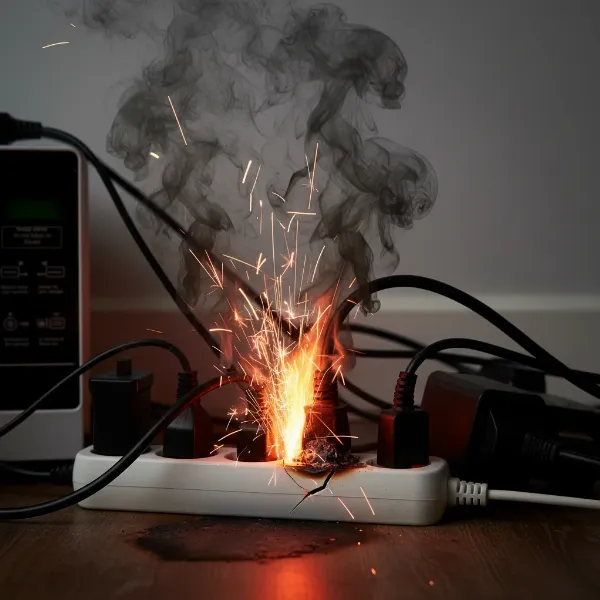 An extension cord overloaded with multiple plugs, depicting a fire hazard with smoke
The Dangers of Misusing Charging Cables and Extension Cords
The most significant danger arises when extension cords are misused, particularly for high-power applications for which they were not designed. A prime example is charging electric vehicles (EVs). Automakers explicitly warn against using standard household extension cords for EV charging due to severe risks of overheating, fire, and electric shock. EV charging draws a substantial amount of continuous power, far exceeding what typical extension cords are built to safely handle. The thinner wires in standard extension cords restrict voltage transfer, leading to slower charging, cord overheating, and potential melting of plugs or receptacles.
While there are specialized EV extension cables available, these are fundamentally different from regular extension cords. They feature thicker gauges, specific connectors (like J1772), and control wires designed to communicate with the EV’s charging system, and are rated for the high, sustained current required for EV charging. For any high-power device, always use the dedicated charging cable provided or recommended by the manufacturer, and if an extension of reach is absolutely necessary, ensure it is a specialized, heavy-duty cord rated for continuous high current, or better yet, install a dedicated outlet.
Making the Right Choice: A Comprehensive Buying Guide
Choosing the correct cable or cord is essential for safety, efficiency, and longevity. By following a structured approach, you can ensure you select the best product for your needs.
Assess Your Needs
Before purchasing, take a moment to consider your specific requirements:
- For what device is the cable/cord? Determine if you need a charging cable for a specific electronic device (phone, laptop) or an extension cord for an appliance or tool.
- What are the power requirements? Check the wattage or amperage of your device or appliance. For charging cables, this dictates the required Power Delivery (PD) rating for fast charging. For extension cords, match the cord’s rating to the device’s demands to prevent overloading.
- Where will it be used? Answering this question helps you decide on length, material, and whether an indoor or outdoor rating is necessary. For instance, a short, durable braided cable is ideal for portable charging, while a long, weather-resistant outdoor extension cord is crucial for yard work.
Prioritize Safety and Quality
Never compromise on safety when purchasing cables and cords.
- Look for Certifications: For extension cords, always choose products certified by reputable safety organizations such as UL (Underwriters Laboratories). For charging cables, reputable brands often adhere to international standards.
- Check Specifications: Verify that the cable’s voltage, current, and wattage ratings are appropriate for your device. For charging cables, ensure it supports the fast charging protocols your device uses (e.g., USB PD). For extension cords, a lower AWG (American Wire Gauge) number indicates a thicker, more capable cord.
- Brand Reputation: Stick to well-known and trusted brands that have a track record of producing high-quality, safe products. For charging cables, brands like Anker, Belkin, and Aukey are often recommended. For extension cords, look for brands specializing in electrical safety products.
- Material Quality: Opt for durable materials, especially for items that will see frequent use or outdoor exposure. Reinforced connectors and braided jackets add to the lifespan of charging cables.
Top Recommendations for Charging Cables and Extension Cords
When it comes to charging cables, many reputable brands consistently deliver quality and performance. For general use, robust USB-C cables from brands known for their electronics accessories offer excellent fast charging capabilities and durability. Consider models with braided nylon exteriors and strong strain relief for enhanced longevity. For Apple devices, certified Lightning cables from established accessory makers ensure optimal compatibility and safe charging.
For extension cords, heavy-duty, outdoor-rated options are highly recommended for their versatility and safety, even if primarily used indoors. Look for cords with lower AWG numbers (e.g., 12 or 14 gauge) and those equipped with a Ground Fault Circuit Interrupter (GFCI) for maximum protection, especially in damp environments or with power tools. Always match the cord’s length and amperage rating to your specific application to avoid voltage drop or overloading.
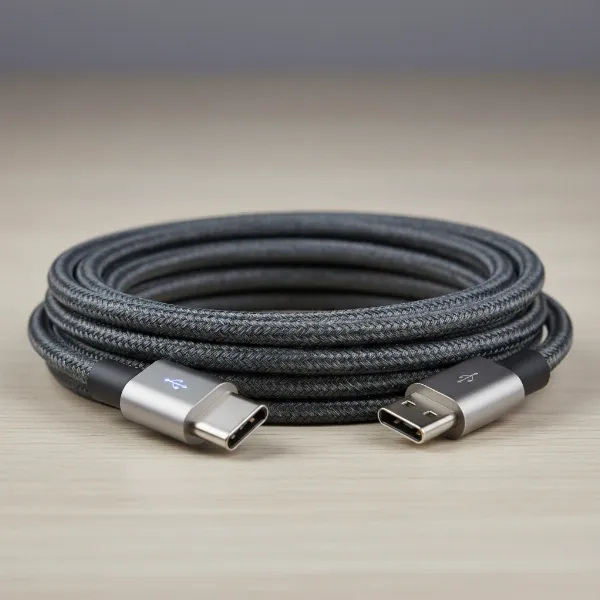 A high-quality braided USB-C charging cable with reinforced connectors, emphasizing durability
Conclusion
The distinction between a charging cable and an extension cord is more than semantic; it’s a critical difference in functionality and safety. Charging cables are specialized conduits for specific devices, optimized for power delivery and often data transfer, while extension cords are designed for temporary power extension to general appliances. Misusing a standard extension cord for high-power device charging can lead to severe risks, including overheating and fire. Prioritizing quality, checking certifications, and understanding the power requirements of your devices are paramount when making your selection. By choosing the right tool for the job, you safeguard your electronics, ensure efficient power delivery, and, most importantly, protect your home and loved ones from potential electrical hazards. What common electrical safety practices do you find are most often overlooked in daily life?
Frequently Asked Questions
What is the primary difference between a charging cable and an extension cord?
A charging cable is designed for a specific electronic device, delivering precise power and often data, while an extension cord simply extends the reach of a wall outlet for general household appliances, providing standard AC power. Their internal wiring and safety ratings are engineered for these distinct purposes.
Can I use any extension cord to charge my smartphone?
While you might be able to plug your phone charger into an extension cord, it’s generally safe for low-power devices. However, for devices requiring fast charging or higher power, ensure the extension cord is in good condition and only used temporarily. Using a dedicated charging cable directly into a wall adapter is always the safest and most efficient method.
Is it safe to use an extension cord for EV charging?
No, it is generally unsafe to use a standard household extension cord for charging an electric vehicle. EV charging demands high, continuous power that typical extension cords are not designed to handle, leading to significant risks of overheating, fire, and electric shock. Only use specialized, manufacturer-certified EV extension cables, if absolutely necessary, or preferably install a dedicated charging outlet.
How can I tell if an extension cord is safe for outdoor use?
Outdoor extension cords are typically thicker, often brightly colored (like orange or yellow), and have durable insulation designed to resist moisture, UV rays, and extreme temperatures. They will also be explicitly marked with an “outdoor” or “W” (weather-resistant) rating on their jacket. Always verify these markings before using any cord outside.
What does “AWG” mean on an extension cord, and why is it important?
AWG stands for American Wire Gauge, which indicates the thickness of the wire within the cord. A lower AWG number (e.g., 10 or 12 AWG) signifies a thicker wire, capable of safely carrying more electrical current for heavy-duty applications. Higher AWG numbers (e.g., 16 or 18 AWG) indicate thinner wires, suitable for lighter loads. Matching the AWG to your device’s power needs is crucial for preventing overheating.