Embarking on a journey, whether for business or pleasure, often involves a myriad of electronic devices that keep us connected, entertained, and productive. Yet, a dead phone or tablet can quickly turn a seamless adventure into a frustrating ordeal. The unsung hero in preventing this travel mishap is a reliable charging cable. Not all charging cables are created equal, especially when you consider the unique demands of travel, from varying power sources to the constant packing and unpacking. This guide will equip you with the knowledge to navigate the bustling market and select the perfect charging cable that stands up to the rigors of your travel lifestyle, ensuring your devices are always powered up and ready for whatever comes next.
Charging Cables: An Overview and Essential Knowledge
Charging cables are the lifeline for our portable electronics, facilitating the transfer of power and data between devices and power sources. In today’s interconnected world, their importance cannot be overstated, as they enable everything from navigating new cities to capturing precious memories. Understanding the fundamental types of charging cables is the first step towards making an informed choice for your travel kit.
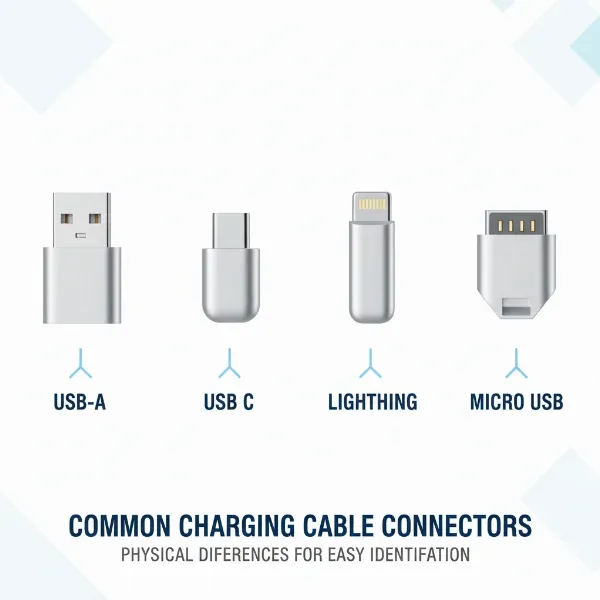
Currently, the market is dominated by several key charging cable types, each designed for specific devices and functionalities. USB-A cables, with their rectangular connectors, are the most traditional and widely recognized, often found on older chargers and computers. USB-C cables represent a modern standard, featuring a reversible, oval-shaped connector that supports faster charging and data transfer, and is quickly becoming universal across new smartphones, laptops, and tablets. Lightning cables are proprietary to Apple devices, providing a robust and compact connection for iPhones, iPads, and AirPods. Lastly, Micro USB cables, characterized by their trapezoidal shape, were once the standard for many Android phones and various accessories but are now largely superseded by USB-C.
When comparing these types, USB-A cables are generally affordable and ubiquitous, though they offer slower charging and data speeds. USB-C cables excel in versatility and speed, supporting Power Delivery (PD) for rapid charging and a reversible design for ease of use, making them highly advantageous for travelers with newer devices. Lightning cables offer seamless compatibility and ecosystem integration for Apple users, albeit at a higher price point and limited to Apple products. Micro USB cables are inexpensive and still common for older gadgets or budget-friendly accessories, but their slower speeds and delicate connectors are often a drawback for frequent travelers.
Key Factors When Selecting a Travel Charging Cable
Choosing a charging cable for travel goes beyond merely picking the right connector. Several critical factors come into play that can significantly impact your charging experience and the longevity of your cable while on the go. Prioritizing these elements ensures you invest in a cable that is not only functional but also durable and efficient for diverse travel scenarios.
Cable Material and Durability
|
Our Picks for the Best Charging cable in 2026
As an Amazon Associate I earn from qualifying purchases.
|
||
| Num | Product | Action |
|---|---|---|
| 1 | AINOPE USB to USB C Cable [2-Pack, 6.6ft] 3.1A Type C Charger Fast Charging, Right Angle USB C Cable for iPhone 17 Carplay Cable, Galaxy S10+ S10 S9, Note 10 9, LG V30, Moto, iPhone 16 15 Charger Cord |
![Check AINOPE USB to USB C Cable [2-Pack, 6.6ft] 3.1A Type C Charger Fast Charging, Right Angle USB C Cable for iPhone 17 Carplay Cable, Galaxy S10+ S10 S9, Note 10 9, LG V30, Moto, iPhone 16 15 Charger Cord on Amazon](https://reviewasc.com/wp-content/plugins/amazon-tables/assets/images/buy.png)
|
| 2 | Anker USB C to USB C Cable, Type-C 60W Fast Charging Cable (6 FT, 2Pack) for iPhone 17 Series, iPad mini 6 and More (Black) |
|
| 3 | USB Type-C to A Cable 5pack 6ft Braided Fast Charging 3A Quick Charger Cord, 6 Foot Compatible iPhone 17/17 Pro/16e/16/15 Pro Max,Samsung Galaxy S10 S9 S8 Plus, Note 10 9 8, LG V50 V40 G8 G7(Grey) |
|
| 4 | LISEN USB C to USB C Cable, 240W C to C Cable Fast Charging [6.6FT, 2 Pack] Type C Charger Fast Charging USBC to USBC Cable for iPhone 17 16 15 Pro Max iPad MacBook Neo Air Pro Samsung S26 S25 Ultra |
|
| 5 | INIU USB C to USB C Cable, 240W Fast Charging Type C Charger Cord, Braided USBC Phone Charger Cable for iPhone 17 16 Pro Max Samsung S26 S25 Laptops MacBook Air 15 M3 iPad Switch [6.6ft+6.6ft Black] |
|
| 6 | Teeind USB Type C Cable Fast Charging, Tpc001 5 Pack(6Ft 3A) Braided C Charger Cables Compatible with Samsung S10e/note 9/s10/s9/s8 Plus/A80/A50/A20 |
|
| 7 | iPhone Charger 3 Pack 10 ft Apple MFi Certified Lightning Nylon Braided Cable Fast Charging Cord Compatible with iPhone 13 12 11 Pro Max XR XS X 8 7 6 Plus SE iPad and More |
|
| 8 | Durcord USB C Cable, Upgarded 2Pack 10ft Fast USB Type C Charging Cable for Android/Phone/Pad/Laptop, Type C Charger Braided USB Cable Compatible withi Phone 17/16/15/Pro/Plus/Max/Sam.Sung-Silver |
|
| 9 | LISEN USB C to USB C Cable, 5-Pack [3.3/3.3/6.6/6.6/10FT] for iPhone 17 Charger Cord, 60W C to C Cable Fast Charging for iPad, iPhone 16 15 Pro Max, Galaxy S25/S24 USBC to USBC Cable Gifts for Men |
|
| 10 | Anker Cable [2 Pack 6ft], USB A to USB C Cable for iPhone 17 Series,Samsung Galaxy S10 S10+, LG V30, Beats Fit Pro and More (Black). |
|
The construction materials of a charging cable directly influence its durability and resistance to wear and tear, which are paramount concerns for travelers. Common materials include PVC (Polyvinyl Chloride), TPE (Thermoplastic Elastomer), and Nylon Braid. PVC cables are typically the most affordable but are also prone to cracking and fraying, making them less ideal for constant bending and packing. TPE offers more flexibility and a rubbery feel, providing better resistance to tangles and minor abrasions than PVC. However, for ultimate durability, nylon braided cables are often the superior choice. The woven nylon exterior provides an extra layer of protection, making them highly resistant to cuts, kinks, and everyday stresses of travel.
Assessing durability also involves looking at the strain relief near the connectors, which is often a weak point. Good cables feature reinforced strain relief to prevent damage from bending. To extend the lifespan of your travel charging cables, always coil them loosely rather than tightly wrapping, avoid yanking them from ports, and store them in a protective pouch to prevent tangling with other items in your bag. These simple maintenance tips can significantly increase your cable’s longevity, saving you money and hassle on your trips.
[image-1|durable-travel-charging-cable|A close-up of a durable, braided nylon charging cable with reinforced connectors, suitable for travel. |
Close-up shot of a high-quality, braided nylon charging cable, showcasing reinforced stress relief at the USB-C connector. The cable is slightly coiled on a neutral background, with soft studio lighting emphasizing the texture and strength of the material. The style is clean, sharp, and realistic, highlighting product features.]
Compatibility and Charging Speed
Understanding your devices’ specific needs is crucial for selecting a compatible and efficient charging cable. First, identify the exact connector types required by all your devices you plan to travel with – this might include a mix of USB-C for a laptop and modern phone, Lightning for an iPhone, and perhaps Micro USB for an older power bank or e-reader. Opting for multi-tip or universal travel cables can often consolidate your charging needs into fewer items, streamlining your packing.
Beyond just physical compatibility, consider the charging speed requirements. Many modern devices support fast charging, which can drastically reduce the time needed to power up. Key fast charging standards include Quick Charge (QC), typically found on Android devices, and Power Delivery (PD), which is prevalent on USB-C devices, including iPhones (when paired with a USB-C to Lightning cable) and many laptops. For PD, you’ll need a cable capable of handling higher wattages (e.g., 60W, 100W) to achieve advertised fast charging speeds.
To check if a charging cable supports fast charging, look for specific wattage ratings (e.g., “PD 60W compatible”) and certifications (like “USB-IF Certified” for USB-C cables) mentioned in the product description. Not all cables are created equal; a generic USB-C cable might fit your device, but it may not support the high wattages needed for Power Delivery fast charging. Investing in certified cables ensures both safety and optimal performance.
Cable Length and Design
The ideal charging cable length for travel is a balance between convenience and portability. While a shorter cable (e.g., 0.3m to 0.5m) is highly portable and great for charging close to a power bank or laptop, it can be restrictive when power outlets are far from your bed or desk in a hotel room. Longer cables (1.5m to 3m) offer much more flexibility, allowing you to comfortably use your device while it charges, but they can be bulkier and more prone to tangling in your bag. A good compromise for most travelers is a 1-meter cable, often supplemented with one very short cable for power banks and one longer cable for less accessible outlets.
Cable design can also significantly impact durability and usability. Flat cables are designed to be tangle-resistant, which is a blessing when rummaging through a backpack. Coiled cables offer flexibility, stretching when needed and retracting for compact storage, making them excellent for specific uses like in a rental car. Some innovative designs include cables with magnetic connectors, allowing for quick attachment and detachment, or multi-tip cables that feature interchangeable connectors (USB-C, Lightning, Micro USB) on a single lead, drastically reducing the number of cables you need to carry. While features like LED indicators can be convenient for locating your cable in the dark, prioritize core durability and functionality over fancy additions for travel.
Comparing Popular Charging Cable Types for Travel
Selecting the right charging cable for your travel needs often comes down to understanding the strengths and weaknesses of each common type. The market offers a range of options, and your choice should align with the devices you carry and your charging priorities.
Detailed Comparison Table
This table provides a concise overview to help you compare the main characteristics of popular charging cable types relevant for travelers:
| Feature | USB-A Cable | USB-C Cable | Lightning Cable | Micro USB Cable |
|---|---|---|---|---|
| Pros for Travel | Widely compatible with older chargers | Fast charging (PD), reversible, versatile | Secure, Apple ecosystem integration | Very affordable, compact |
| Cons for Travel | Slower charging, not reversible | Higher cost, requires newer devices | Apple-exclusive, often fragile | Slower charging, fragile connector |
| Durability | Varies by material, can be fragile | Generally robust, especially braided | Varies, often prone to fraying | Most prone to physical damage |
| Compatibility | Older phones, power banks, wall bricks | Modern phones, laptops, tablets, accessories | iPhones, iPads, AirPods, Apple devices | Older Android phones, small electronics |
| Charging Speed | Standard (up to 2.4A) | Fast (up to 240W PD) | Fast (with PD charger) | Standard (up to 2A) |
| Cost | Low | Moderate to High | High | Very Low |
For most modern travelers, a high-quality USB-C cable offers the best balance of speed, versatility, and compatibility with an increasing number of devices. However, Apple users will still need a Lightning cable, potentially a USB-C to Lightning for fast charging. USB-A to USB-C or Micro USB cables are still relevant for charging older power banks or accessories.
Comprehensive Buying Guide for Travel Charging Cables
Navigating the multitude of options for charging cables can be daunting, especially when trying to find the perfect one for your travel adventures. A structured approach ensures you make a wise investment that meets all your specific requirements.
Identifying Your Travel Charging Needs
The first step in any purchasing decision is to clearly define what you need. Consider which devices you’ll be powering – is it just your smartphone, or also a tablet, a laptop, headphones, and a smart watch? This will dictate the types and number of connectors you need. Next, think about charging speed. Do you need your phone to go from 0 to 50% in 30 minutes, or is an overnight charge sufficient? Fast charging cables and compatible chargers are crucial for those with limited time. Finally, assess your preferred cable length. Do you often find yourself far from power outlets, necessitating a longer cable, or do you prefer short, tidy cables for charging from a power bank on the go? Answering these questions will narrow down your choices significantly.
Researching Reputable Brands
The market for charging cables is flooded with generic options, but investing in a reputable brand is crucial for reliability, safety, and performance, especially when traveling. Brands like Anker, Aukey, Belkin, and UGREEN are widely recognized for their high-quality charging accessories. Anker, for example, is celebrated for its durable PowerLine series, known for exceptional build quality and fast-charging capabilities. Belkin often offers strong warranties and MFi-certified (Made For iPhone/iPad) Lightning cables, ensuring full compatibility and safety with Apple devices. Aukey provides a good balance of performance and value, while UGREEN has gained popularity for its wide range of reliable and affordable USB-C solutions. Prioritize brands that offer clear specifications, positive customer reviews, and a good warranty policy.
Checking Specifications and Safety Certifications
Before making a final purchase, always scrutinize the technical specifications and look for crucial safety certifications. For USB-C cables, ensure they are USB-IF Certified, which guarantees compliance with USB standards for safety and performance. For Apple devices, ensure Lightning cables are MFi certified; uncertified cables can damage your device or cease to function with iOS updates. Always check the cable’s stated power delivery capabilities (e.g., 60W, 100W) to match your device’s charging requirements. An underpowered cable might still charge your device but will do so much slower, especially for laptops.
Safety certifications such as CE (Conformité Européenne), FCC (Federal Communications Commission), and RoHS (Restriction of Hazardous Substances) indicate that the product meets environmental and safety standards. These certifications are not merely labels; they assure that the cable has undergone rigorous testing and is safe to use, protecting your devices and, more importantly, you from potential electrical hazards. Avoid no-name brands that do not display these essential certifications, as they often cut corners on safety and quality.
Top-Rated Charging Cables for Travelers
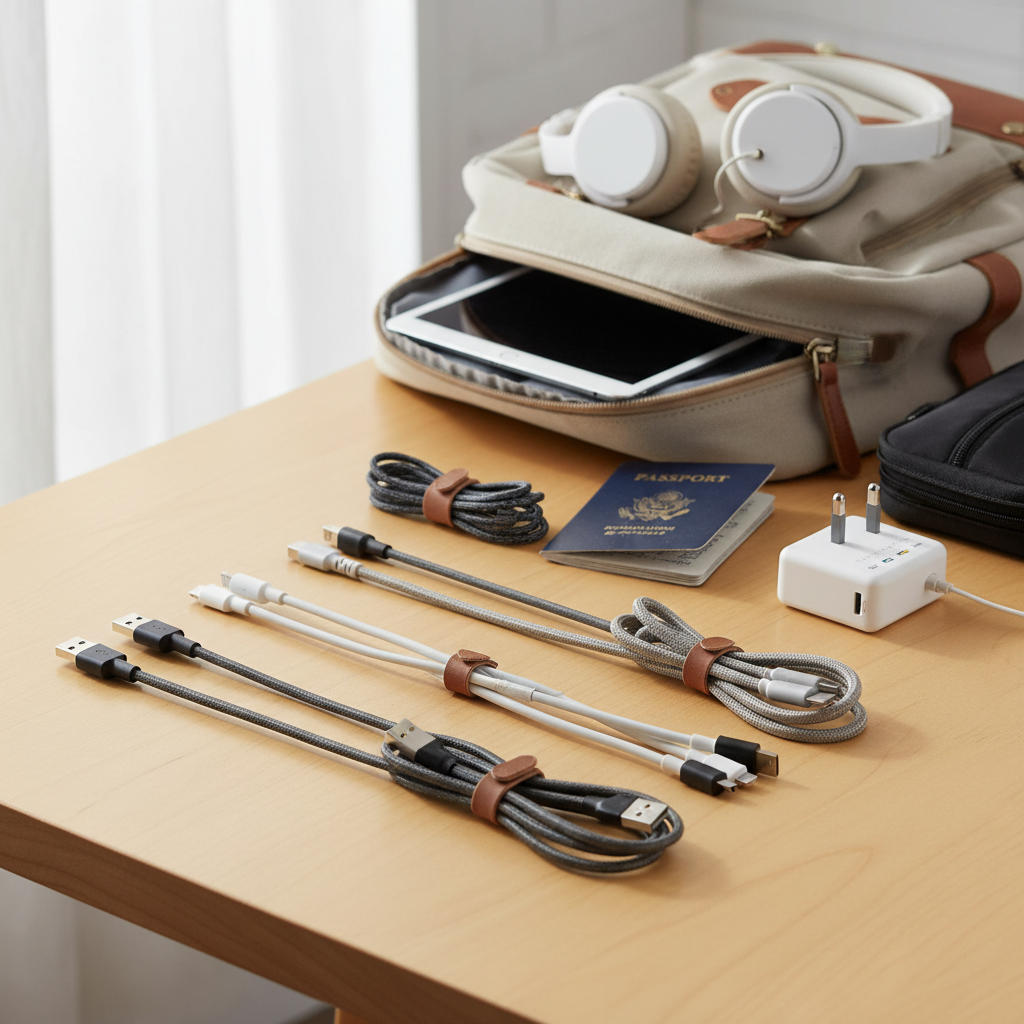
For travelers who demand reliability and efficiency, several charging cables consistently rise to the top. When selecting the best, consider your primary devices and how you plan to use them. For Apple users, an Anker PowerLine III Flow USB-C to Lightning cable is an excellent choice, offering MFi certification, impressive durability from its silicone finish, and support for fast charging your iPhone or iPad. Its flexible design is also great for travel.
[image-2|travel-charging-cable-selection|A collection of various charging cables (USB-C, Lightning, multi-tip) neatly organized for travel, with a focus on durability. |
An overhead shot of a travel packing cube unzipped, revealing a neatly organized collection of charging cables. Prominent cables include a braided USB-C, a flexible silicone Lightning cable, and a compact multi-tip cable. The background shows a passport and a world map, implying travel. The lighting is bright and even, giving a clean, editorial product photography feel.]
For Android and USB-C laptop users, the UGREEN USB-C to USB-C 100W cable is highly recommended. It boasts robust braided nylon construction, support for 100W Power Delivery, making it suitable for charging many laptops and tablets quickly, and excellent overall value. Travelers frequently moving between different device ecosystems might find a multi-tip cable invaluable. Brands like inCharge or Native Union offer ingenious solutions that integrate USB-C, Lightning, and Micro USB tips into a single, compact keychain-sized cable, perfect for emergencies or minimalist packing. While these universal options might not offer the fastest charging for all devices, their convenience for diverse gadgetry is unmatched. Remember to always pair these high-quality cables with an equally reliable multi-port travel charger for the ultimate travel charging setup.
“A traveler’s best friend isn’t just a passport, but a multi-functional, durable charging cable. It’s the silent workhorse that keeps your journey on track.” – Alex Chen, Tech Travel Blogger
Conclusion
Choosing the right charging cable for your travel needs is a strategic decision that significantly impacts your convenience and connectivity while on the move. By understanding the different types of cables, prioritizing durability through robust materials, ensuring compatibility and optimal charging speeds, and selecting appropriate lengths and designs, you can assemble a reliable charging arsenal. Always lean towards reputable brands and verify safety certifications to protect your valuable devices. The perfect travel charging cable is more than just a wire; it’s a dependable companion that ensures your devices remain powered, keeping you connected to the world, capturing memories, and navigating new adventures without interruption. What’s the most challenging charging dilemma you’ve faced on a trip, and how did you solve it?
Frequently Asked Questions
What is the most durable type of charging cable for travel?
Nylon braided charging cables are generally considered the most durable for travel. Their woven exterior provides superior protection against fraying, kinking, and general wear and tear from being packed, unpacked, and frequently used, making them ideal for the rigors of travel.
Can I use a regular charging cable for fast charging on my trip?
Not necessarily. While a regular cable might fit, for fast charging (like Power Delivery or Quick Charge), you need a cable specifically designed to handle higher wattages. Look for cables explicitly stating “PD compatible” or “QC compatible” with wattage ratings (e.g., 60W, 100W) to ensure optimal speed.
Is it worth carrying a multi-tip charging cable for travel?
Yes, a multi-tip charging cable can be incredibly useful for travel, especially if you carry devices with different port types (e.g., USB-C, Lightning, Micro USB). It reduces the number of individual cables you need to pack, simplifying your carry-on and ensuring you’re prepared for various charging needs.
What length of charging cable is best for international travel?
A 1-meter (3.3 feet) charging cable is often a good all-around length for international travel, offering a balance between portability and reach. However, carrying one shorter cable (0.3m) for power banks and one longer (2m) for inaccessible outlets in hotel rooms can provide maximum flexibility.
Why are MFi certified Lightning cables important for Apple devices?
MFi (Made For iPhone/iPad) certification ensures that a Lightning cable meets Apple’s strict performance and safety standards. Using an uncertified cable can lead to compatibility issues, slower charging, or even damage to your Apple device, making MFi certification a crucial indicator of quality.