In our increasingly connected world, charging cables are no longer mere accessories; they are essential lifelines for our smartphones, tablets, laptops, and countless other devices. Yet, the sheer variety on the market—from budget-friendly options to premium, high-performance lines—can make choosing the right one a daunting task. As a technician with over a decade of hands-on experience, I’ve tested and evaluated hundreds of charging cables, delving deep into charging technology, safety standards, and the critical factors that separate a quality, durable cable from a disposable one. This comprehensive guide is designed to cut through the noise, offering clear insights and honest recommendations to help you find the perfect charging cable that not only meets your needs but also stands the test of time. Let’s explore the best charging cables available and discover what truly makes them excel.
Charging Cable: Overview and What You Need to Know
A charging cable is the crucial link between your device and its power source, playing a vital role in our modern, always-on lifestyles. While their primary function is to deliver power, their capabilities vary significantly, impacting everything from charging speed to data transfer rates. Understanding the different types of cables and their underlying technology is key to making an informed decision.
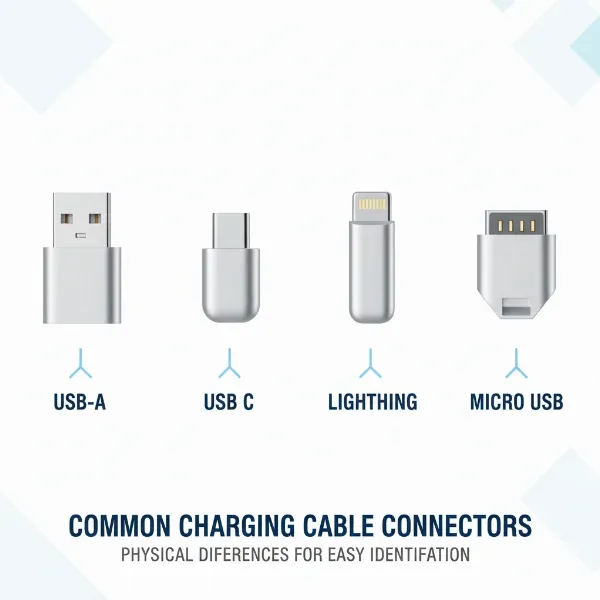
There are several prevalent types of charging cables you’ll encounter today, each with its own design, compatibility, and performance characteristics. The most common include USB-A, USB-C, Lightning, and Micro USB. Each type has evolved to meet different technological demands and device ecosystems, leading to a diverse market of connectivity solutions.
Common Charging Cable Types
- USB-A: This is the original rectangular USB connector, widely recognized and used for decades. It’s typically found on older chargers, computers, and many accessories.
- Pros: Extremely common and compatible with a vast array of legacy devices. It has a robust, simple design.
- Cons: Limited in terms of charging speed (typically up to 10W) and data transfer rates (max 5 Gbps for USB 3.0 versions), and it’s not reversible, meaning you have to insert it in a specific orientation.
- Micro USB: A smaller, trapezoidal connector that became the standard for many smartphones, tablets, and portable devices before the advent of USB-C.
- Pros: Highly prevalent on older Android devices, cameras, and various gadgets, making it a widespread solution for its era.
- Cons: Supports slower charging speeds (typically USB 2.0 speeds up to 480 Mbps) and lower power delivery. Like USB-A, it’s not reversible, and its fragile design often leads to bending or breakage over time.
- USB-C: The latest and most versatile USB standard, characterized by its oval, reversible connector. It is rapidly becoming the universal standard for modern electronics.
- Pros: Reversible design makes it easy to plug in. It supports significantly faster charging speeds (up to 240W with USB Power Delivery 3.1) and high-speed data transfer (up to 40 Gbps with USB4). Its versatility allows it to carry video and other protocols, simplifying connectivity.
- Cons: While becoming ubiquitous, its adoption is still in transition, so some older devices may not be compatible. Higher-spec USB-C cables can also be more expensive.
- Lightning: Apple’s proprietary connector, used exclusively for iPhones (up to iPhone 14), iPads, and other Apple accessories. It features a slim, reversible design.
- Pros: Reversible and integrates seamlessly with the Apple ecosystem. When paired with a USB-C Power Delivery charger, it enables fast charging for compatible iPhones.
- Cons: Exclusive to Apple devices, limiting its universal appeal. It typically handles lower power outputs compared to high-end USB-C, although fast charging is supported for newer Apple products.
|
Our Picks for the Best Charging cable in 2026
As an Amazon Associate I earn from qualifying purchases.
|
||
| Num | Product | Action |
|---|---|---|
| 1 | LISEN USB C to USB C Cable, 5-Pack [3.3/3.3/6.6/6.6/10FT] for iPhone 17 Charger Cord, 60W C to C Cable Fast Charging for iPad, iPhone 16 15 Pro Max, Galaxy S25/S24 USBC to USBC Cable Gifts for Men |
![Check LISEN USB C to USB C Cable, 5-Pack [3.3/3.3/6.6/6.6/10FT] for iPhone 17 Charger Cord, 60W C to C Cable Fast Charging for iPad, iPhone 16 15 Pro Max, Galaxy S25/S24 USBC to USBC Cable Gifts for Men on Amazon](https://reviewasc.com/wp-content/plugins/amazon-tables/assets/images/buy.png)
|
| 2 | LISEN USB C to USB C Cable, 240W C to C Cable Fast Charging [6.6FT, 2 Pack] Type C Charger Fast Charging USBC to USBC Cable for iPhone 17 16 15 Pro Max iPad MacBook Neo Air Pro Samsung S26 S25 Ultra |
|
| 3 | AINOPE USB to USB C Cable [2-Pack, 6.6ft] 3.1A Type C Charger Fast Charging, Right Angle USB C Cable for iPhone 17 Carplay Cable, Galaxy S10+ S10 S9, Note 10 9, LG V30, Moto, iPhone 16 15 Charger Cord |
|
| 4 | Anker USB C to USB C Cable, Type-C 60W Fast Charging Cable (6 FT, 2Pack) for iPhone 17 Series, iPad mini 6 and More (Black) |
|
| 5 | Durcord USB C Cable, Upgarded 2Pack 10ft Fast USB Type C Charging Cable for Android/Phone/Pad/Laptop, Type C Charger Braided USB Cable Compatible withi Phone 17/16/15/Pro/Plus/Max/Sam.Sung-Silver |
|
| 6 | Anker Cable [2 Pack 6ft], USB A to USB C Cable for iPhone 17 Series,Samsung Galaxy S10 S10+, LG V30, Beats Fit Pro and More (Black). |
|
| 7 | iPhone Charger 3 Pack 10 ft Apple MFi Certified Lightning Nylon Braided Cable Fast Charging Cord Compatible with iPhone 13 12 11 Pro Max XR XS X 8 7 6 Plus SE iPad and More |
|
| 8 | USB Type-C to A Cable 5pack 6ft Braided Fast Charging 3A Quick Charger Cord, 6 Foot Compatible iPhone 17/17 Pro/16e/16/15 Pro Max,Samsung Galaxy S10 S9 S8 Plus, Note 10 9 8, LG V50 V40 G8 G7(Grey) |
|
| 9 | Teeind USB Type C Cable Fast Charging, Tpc001 5 Pack(6Ft 3A) Braided C Charger Cables Compatible with Samsung S10e/note 9/s10/s9/s8 Plus/A80/A50/A20 |
|
| 10 | INIU USB C to USB C Cable, 240W Fast Charging Type C Charger Cord, Braided USBC Phone Charger Cable for iPhone 17 16 Pro Max Samsung S26 S25 Laptops MacBook Air 15 M3 iPad Switch [6.6ft+6.6ft Black] |
|
Choosing the right cable means matching its connector type to your device’s port, and considering the required charging speed and data transfer capabilities. While older standards like USB-A and Micro USB remain functional for legacy devices, USB-C stands out as the future-proof solution for its superior performance and versatility.
Important Factors When Choosing a Charging Cable
Selecting a high-quality charging cable involves more than just picking one that fits. Several critical factors influence a cable’s performance, durability, and safety. Understanding these elements will empower you to make an informed decision that ensures reliable charging and longevity for your devices.
Cable Material and Durability
The construction materials of a charging cable significantly determine its lifespan and resilience against daily wear and tear. Cheap cables often use basic plastic sheathing that frays quickly, particularly at the connector ends, which are common points of failure. Investing in cables with superior materials can prevent frequent replacements and offer better protection.
- Common Materials:
- PVC (Polyvinyl Chloride): A common, inexpensive plastic used for cable jackets. It’s flexible but less durable against bending, kinking, and temperature fluctuations.
- TPE (Thermoplastic Elastomer): Offers better flexibility and a softer touch than PVC, with improved resistance to bends and abrasion. Many standard cables use TPE.
- Nylon Braided: A popular choice for enhanced durability, braided nylon jackets wrap around the inner wires, providing excellent resistance to fraying, cuts, and tangles. This material significantly increases the cable’s bend lifespan, often surviving tens of thousands of bends.
- Kevlar Braided: Some premium cables incorporate Kevlar fibers for extreme strength and tensile resistance, making them exceptionally robust against pulls and snags.
“A well-constructed cable isn’t just about avoiding visible damage; it’s about protecting the delicate internal wiring that enables efficient power and data flow.” – Alex Pham, Lead Technician, Reviewasc.com
To extend your cable’s lifespan, avoid sharp bends, especially near the connectors, and unplug it by gripping the connector head rather than pulling the cable itself. Proper storage, such as coiling it loosely, also prevents internal damage.
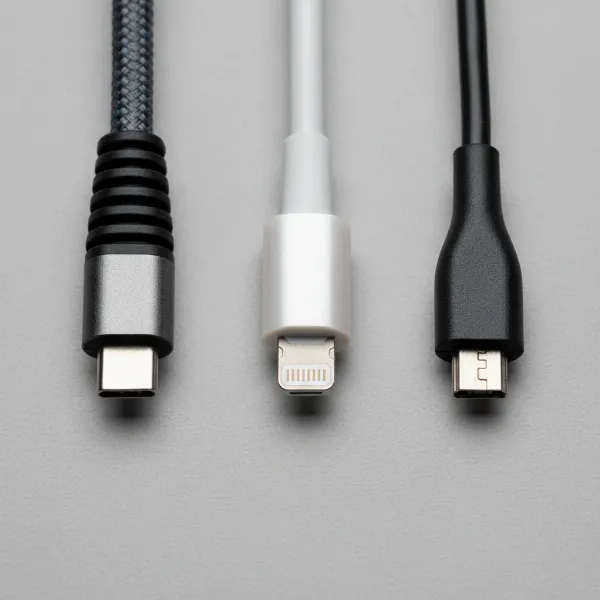 A close-up of different charging cable materials: braided nylon, TPE, and PVC, showcasing their textures and durability differences with an emphasis on reinforced connectors.
Compatibility and Charging Speed
The ability of a charging cable to work with your devices and deliver power efficiently is paramount. Not all cables are created equal, and their specifications directly impact charging performance.
- Device Compatibility: Always ensure the cable’s connectors match your device’s ports. While USB-C is gaining traction, many older devices still rely on Micro USB or USB-A. Apple devices (up to iPhone 14) require Lightning cables.
- Fast Charging Standards: Modern devices support various fast charging protocols that require compatible cables and chargers to achieve their full potential.
- USB Power Delivery (USB-PD): Predominantly associated with USB-C, USB-PD allows for higher power outputs (up to 240W with the latest standards) and intelligent power negotiation between the charger and device. USB-C cables supporting PD often contain an “e-marker” chip that communicates the cable’s capabilities.
- Qualcomm Quick Charge (QC): A widely used fast charging technology found in many Android devices. While it often works with standard USB-A to USB-C cables, optimized cables can enhance performance.
- Other proprietary standards: Brands like Samsung (Super Fast Charging) and OnePlus (Warp Charge) have their own fast-charging technologies that may work best with their proprietary cables and chargers.
To check if a cable supports fast charging, look for specifications like “Power Delivery,” “PD,” or wattage ratings (e.g., 60W, 100W, 240W) in the product description. Higher wattage ratings indicate the cable’s capacity to handle more power, which is essential for rapidly charging laptops and high-capacity tablets. Pairing a fast-charging cable with a compatible fast charger and device is crucial to unlock the maximum charging speed.
Cable Length and Design
While often overlooked, the length and design of a charging cable significantly impact user convenience and long-term functionality. The ideal cable length depends entirely on your usage scenarios.
-
Length Options:
- Short Cables (0.3m – 1m): Ideal for power banks, charging alongside a laptop, or minimizing clutter on a desk. They are generally more portable and less prone to tangling.
- Standard Cables (1m – 2m): The most common length, suitable for everyday use in most settings, offering a good balance between reach and manageability.
- Long Cables (2m – 3m+): Excellent for reaching distant outlets, charging in bed, or while relaxing on a couch. However, very long cables can sometimes experience a slight drop in charging efficiency due to increased resistance, especially with lower-quality cables. They are also more prone to tangling and wear.
-
Design Factors:
- Flexibility: A flexible cable is easier to coil and store, and less likely to put strain on ports. Materials like silicone or high-quality TPE offer good flexibility.
- Reinforced Strain Relief: The area where the cable meets the connector is a common failure point. Look for cables with robust, extended strain relief to prevent fraying and internal wire damage.
- Connector Housing: Durable metal or high-grade plastic connector housings offer better protection against bending and corrosion. Gold-plated pins can also prevent corrosion and ensure a more stable connection.
- Special Features: Some cables come with unique features like LED indicators to show charging status, magnetic tips for easier connection, or built-in cable ties for organization. While not essential, these can enhance user experience.
Consider where and how you primarily use your charging cables. A short, robust cable might be perfect for your travel kit, while a longer, flexible one could be ideal for home use. Prioritizing quality construction and appropriate length for your specific needs will ensure both convenience and durability.
Comparing Popular Charging Cable Types
To help you navigate the vast market, here’s a detailed comparison of the most common charging cable types. This table highlights their key characteristics, making it easier to identify which cable best suits your devices and lifestyle.
Detailed Comparison Table
| Feature | USB-A Cable | USB-C Cable | Lightning Cable | Micro USB Cable |
|---|---|---|---|---|
| Connector Type | Rectangular | Oval, Reversible | Slim, Reversible | Trapezoidal |
| Device Compatibility | Older chargers, computers, various peripherals | Modern smartphones, laptops, tablets, new accessories | iPhones (up to 14), iPads, Apple accessories | Older Android phones, cameras, budget gadgets |
| Charging Speed | Slow (up to 10W standard) | Fast (up to 240W with PD 3.1) | Moderate (fast charge w/ USB-C PD charger) | Slow (up to 10W standard) |
| Data Transfer Speed | Up to 5 Gbps (USB 3.0) | Up to 40 Gbps (USB4) | Up to 480 Mbps (USB 2.0) | Up to 480 Mbps (USB 2.0) |
| Reversibility | No | Yes | Yes | No |
| Durability | Varies by material, connector often sturdy | Generally good, especially with reinforced designs | Varies, often prone to fraying with Apple’s own | Prone to damage at connector due to fragile design |
| Common Uses | Powering older accessories, connecting to legacy ports | Universal charging and data for modern devices | Charging Apple mobile devices | Legacy charging for older portable electronics |
| Cost | Low | Moderate to High (for high-spec cables) | Moderate to High (often higher for certified) | Very Low |
This comparison underscores USB-C’s position as the leading standard for future-proof connectivity due to its speed, versatility, and reversible design. While Lightning serves its dedicated Apple user base effectively, and USB-A and Micro USB remain relevant for older devices, the industry is steadily moving towards USB-C as the universal solution.
Comprehensive Charging Cable Buying Guide
Choosing the right charging cable can dramatically improve your charging experience and device longevity. With so many options, a systematic approach helps you filter through the choices and pinpoint the best fit for your needs.
1. Identify Your Usage Needs
Before you start browsing, consider how and where you’ll be using the cable. This clarity will narrow down your options significantly.
- Which devices do you need to charge? List all devices (phone, tablet, laptop, earbuds, power bank) and their specific port types (USB-C, Lightning, Micro USB). This is the most crucial first step.
- What charging speed do you require? Do you need rapid charging for a laptop, or is a slower charge for overnight phone charging acceptable? For fast charging, ensure both your device and charger support the necessary protocols (e.g., USB-PD for USB-C, Quick Charge).
- What cable length is appropriate? Think about your typical charging spots. Do you need a short cable for a power bank or car, a standard length for a desk, or a long one for a bedside table far from an outlet?
- Will you also be transferring data? If you frequently transfer large files to or from a computer, prioritize cables with higher data transfer specifications (e.g., USB 3.1 Gen 2 or USB4 for USB-C).
2. Research Reputable Brands
The brand behind a charging cable often correlates with its quality, durability, and adherence to safety standards. While tempting to opt for the cheapest option, investing in a reputable brand usually pays off in the long run.
- Leading Brands:
- Anker: Widely regarded for its excellent balance of quality, performance, and value across a broad range of charging accessories. Their PowerLine series is particularly known for durability.
- Belkin: A long-standing brand known for reliable and high-quality cables, often offering robust construction and excellent compatibility, especially with Apple products.
- Aukey: Another popular choice that delivers dependable charging solutions at competitive prices.
- Native Union: Focuses on stylish designs and premium materials, often incorporating braided fabrics and robust strain relief for enhanced durability.
- Volta: Known for innovative magnetic cables and a strong emphasis on durability and multi-device compatibility.
When evaluating brands, look for consistent positive reviews regarding product longevity and customer service. Brands that offer good warranties also indicate confidence in their product quality.
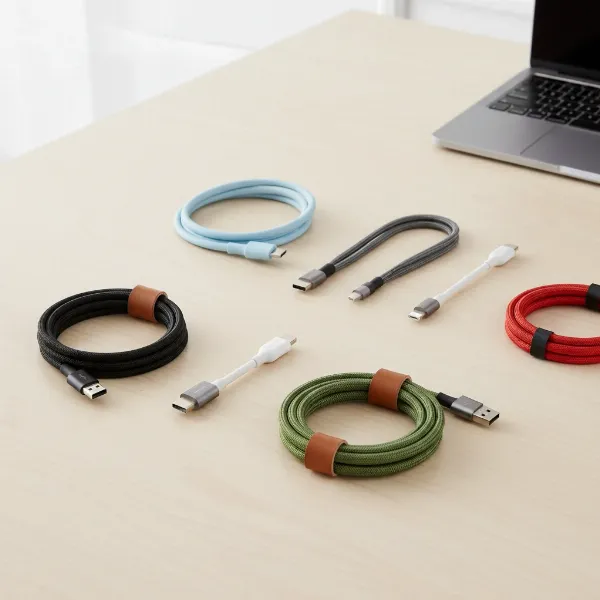 A diverse selection of charging cables from reputable brands like Anker, Belkin, and Native Union, arranged neatly on a modern surface, highlighting their varying designs and quality.
3. Verify Technical Specifications and Safety Certifications
This is where the rubber meets the road. A cable’s technical specifications and certifications are non-negotiable for safety and performance.
- Check Electrical Specifications:
- Voltage (V) & Amperage (A): Ensure these match your device and charger’s requirements. High-quality cables will clearly state their maximum supported voltage and amperage.
- Wattage (W): For fast charging, look for the wattage rating (e.g., 60W, 100W, 240W). This indicates the maximum power the cable can safely deliver.
- Gauge (AWG): Thicker internal wires (lower AWG number, e.g., 24 AWG) reduce resistance, allowing for faster and safer power transfer, especially important for high-wattage charging.
- Look for Safety Certifications:
- CE (Conformité Européenne): Indicates compliance with European Union health, safety, and environmental protection directives. Essential for products sold in the EU.
- FCC (Federal Communications Commission): Mandatory for electronic devices sold in the United States, ensuring they don’t cause harmful electromagnetic interference.
- RoHS (Restriction of Hazardous Substances): Ensures the product is free from hazardous materials like lead and mercury, a globally recognized environmental standard.
- UL (Underwriters Laboratories): Focuses on the safety of the cable components, indicating rigorous testing for fire and electrical hazards.
- USB-IF Certification: A voluntary certification from the USB Implementers Forum, guaranteeing that a USB cable meets specific industry standards for performance and compatibility.
Always prioritize cables with multiple, recognizable safety certifications. These certifications are your assurance that the cable has undergone rigorous testing and meets industry benchmarks for safety and quality, protecting both your devices and your well-being.
Top Charging Cables You Can Trust
Based on extensive testing and user feedback, several charging cables consistently stand out for their reliability, performance, and durability. Here are some of the top choices across different categories and budgets:
- Anker PowerLine III USB-C to USB-C (100W):
- Highlights: Often hailed as an all-around best choice for USB-C to USB-C. It supports up to 100W Power Delivery, making it suitable for fast-charging most laptops, tablets, and phones. Its silicone finish offers excellent flexibility and tangle-free use, while reinforced connectors ensure durability. Anker’s reputation for quality makes this a trusted option.
- Ideal for: Users seeking a versatile, high-speed, and durable USB-C cable for a wide range of modern devices.
- Belkin BoostCharge 240W USB-C to USB-C:
- Highlights: For those needing maximum power delivery, this cable supports the latest USB-PD 3.1 standard up to 240W. It features a quality braided exterior and robust overmolding, designed to withstand over 30,000 bends. It also includes dual eMarker chips for enhanced safety and performance.
- Ideal for: Power users with high-wattage laptops or devices that demand the absolute fastest charging speeds.
- Anker PowerLine+ II Lightning Cable:
- Highlights: This is a top contender for Apple users seeking a durable Lightning cable. It features a braided nylon sheath and reinforced stress points, providing superior flexibility and resistance to fraying compared to standard Apple cables. It ensures efficient charging for iPhones and iPads.
- Ideal for: iPhone and iPad users looking for a robust and long-lasting alternative to Apple’s stock cables.
- JSaux USB-C to USB-C 2-Pack (100W):
- Highlights: A fantastic budget-friendly option that doesn’t compromise much on performance. These cables support 100W charging and often come in longer lengths (e.g., 6.6ft) in a convenient two-pack. While not as premium as some Anker models, they offer excellent value for money.
- Ideal for: Users on a budget who need reliable 100W USB-C charging for multiple devices or longer reach.
- Anker New Nylon Series 3 USB-C to USB-C (60W 2-pack):
- Highlights: Another strong value proposition from Anker, offering a pair of 60W USB-C to USB-C cables at an affordable price. These braided nylon cables are durable enough for everyday phone and tablet charging, as well as smaller laptops.
- Ideal for: Everyday charging needs for smartphones, tablets, and smaller laptops, offering a great balance of price and durability.
When choosing, consider these highly-rated options and align them with your specific device types, charging speed requirements, and budget. These cables represent some of the best in terms of combining performance, durability, and safety features.
Conclusion
The humble charging cable, often an afterthought, is a critical component in our tech-driven lives, directly influencing the efficiency and safety of our devices. From understanding the distinct characteristics of USB-A, Micro USB, USB-C, and Lightning cables to recognizing the importance of materials like braided nylon and essential safety certifications such as CE, FCC, and RoHS, making an informed choice is key. Investing in a quality charging cable from reputable brands like Anker or Belkin not only ensures faster, more reliable power delivery but also contributes to the longevity of your valuable electronics. By considering factors like durability, compatibility, and appropriate length for your specific needs, you can easily find a cable that truly enhances your daily charging experience. What aspects of your current charging setup do you find most frustrating, and how might a better cable alleviate those issues?
Frequently Asked Questions
What is the most durable charging cable material?
Braided nylon, often reinforced with Kevlar or other strong synthetic fibers, is generally considered the most durable material for charging cable jackets. This construction offers superior resistance to fraying, bending, and tangling compared to standard PVC or TPE plastic coatings, significantly extending the cable’s lifespan.
Do expensive charging cables charge faster?
Not necessarily, but high-quality cables capable of faster charging often cost more. Expensive cables are typically built with thicker gauge copper wires, better shielding, and sometimes e-marker chips (for USB-C PD) that allow them to safely handle higher power outputs (e.g., 60W, 100W, 240W), leading to faster charging if your device and charger also support those speeds.
How can I tell if a charging cable is safe?
Look for recognized safety certifications like CE (for Europe), FCC (for the US), and RoHS (for hazardous substance restriction). Additionally, cables from reputable brands often undergo rigorous internal testing and may have UL certification for the cable components. Avoid unbranded, suspiciously cheap cables, as they may lack these crucial safety standards.
Can a bad charging cable damage my phone?
Yes, a poorly made or damaged charging cable can potentially harm your phone. Cheap cables with inferior internal wiring can overheat, deliver unstable power, or even short-circuit, which could degrade your device’s battery over time or, in extreme cases, cause immediate damage or fire hazards. Always use reputable, certified cables.
What is the difference between USB-C and Lightning cables?
USB-C is a universal, reversible connector that supports various protocols, including high-speed charging (up to 240W) and data transfer, used across many modern devices. Lightning is Apple’s proprietary, reversible connector primarily used for iPhones (up to iPhone 14) and iPads, offering fast charging when paired with a USB-C Power Delivery adapter, but exclusive to the Apple ecosystem.
Should I get a long or short charging cable?
The ideal cable length depends on your usage. Short cables (under 1m) are great for portability, power banks, and minimizing desk clutter. Standard lengths (1-2m) suit most everyday scenarios. Longer cables (2m+) provide convenience for distant outlets but can be prone to tangling and may experience slight efficiency loss with lower-quality cables due to increased resistance.