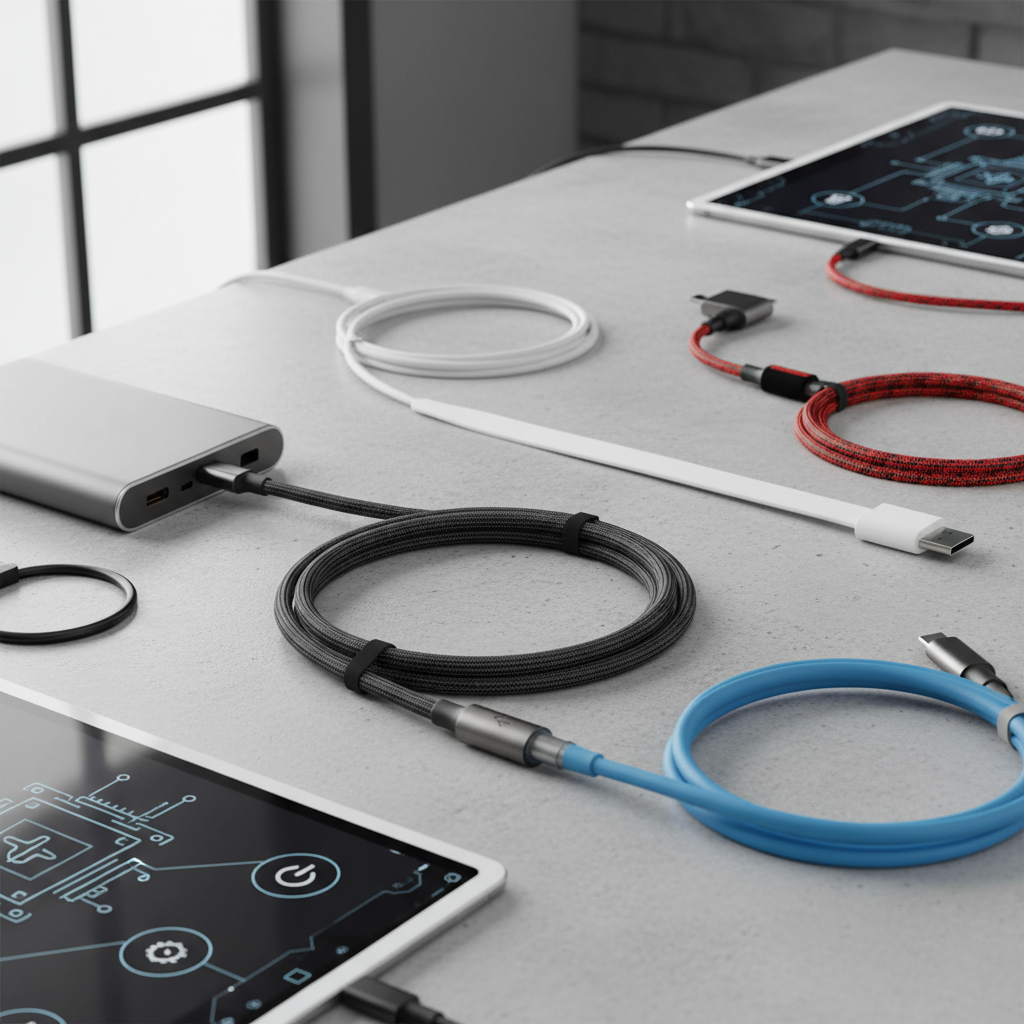
In our increasingly connected world, a dead device battery can feel like a major setback, cutting us off from work, communication, and entertainment. Whether you’re a busy professional, a digital nomad, or simply someone who relies heavily on their smartphone, ensuring your gadgets stay powered is paramount. This often leads to a crucial decision: should you depend on a traditional charging cable and wall adapter, or invest in the flexibility of a portable power bank? Each offers distinct advantages and drawbacks, and understanding these differences is key to selecting the ideal charging companion for your lifestyle. This guide will meticulously compare charging cables and power banks, exploring their functionalities, benefits, limitations, and the critical factors to consider when making your choice.
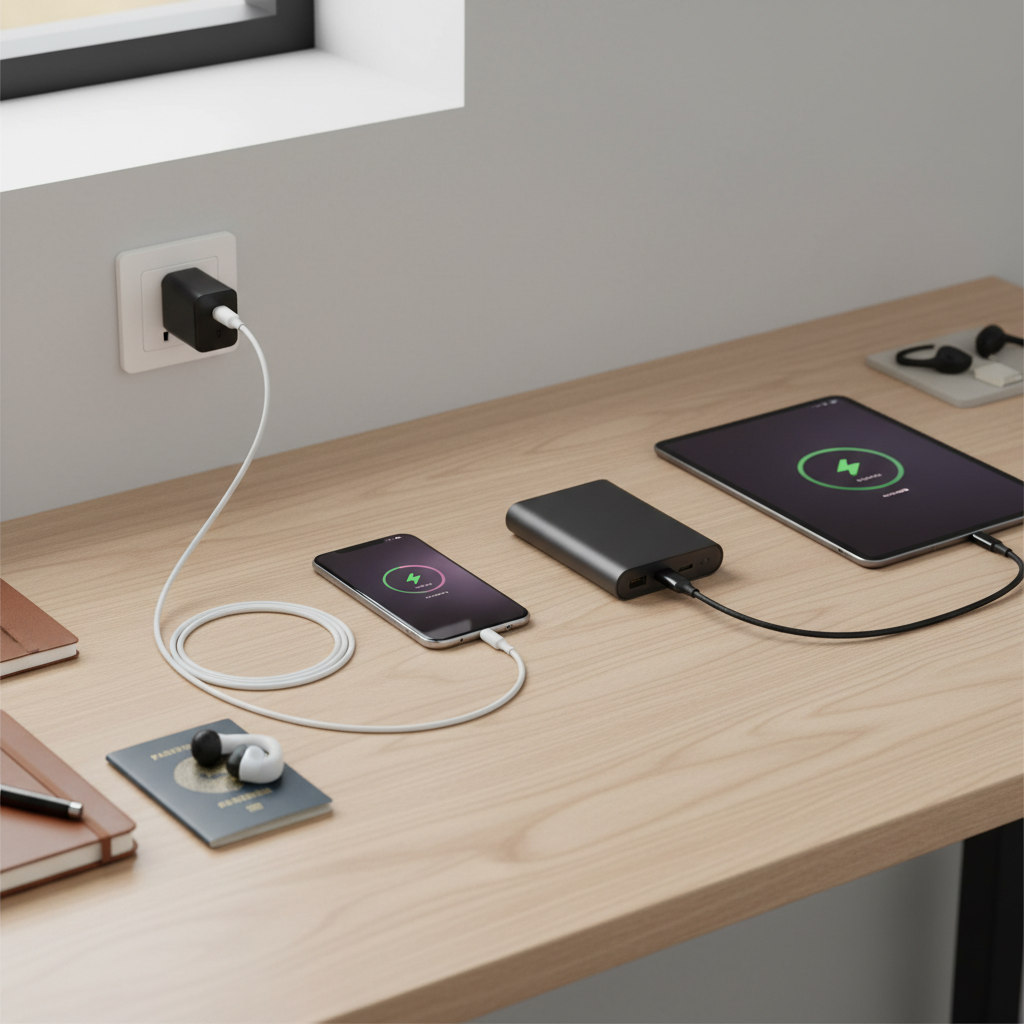
Charging Cable vs Power Bank: Understanding Your Mobile Power Needs
Staying powered in our fast-paced, device-dependent lives is a constant challenge. From smartphones and tablets to smartwatches and earbuds, our daily routines are intertwined with electronic gadgets that demand consistent energy. The fundamental dilemma often boils down to two primary methods for replenishing battery life: a charging cable, typically connected to an external power source, or a self-contained portable power bank. While both serve the same ultimate goal of keeping your devices alive, their operational principles, convenience, and suitability for various situations differ significantly, making the choice anything but simple.
The Charging Cable: Power with a Connection
A charging cable, coupled with a wall adapter or a car charger, represents the most traditional and widespread method of powering our electronic devices. It draws electricity directly from a grid-connected outlet or a vehicle’s power system, delivering it to your device. This method has long been the backbone of device charging, offering reliability and straightforward operation whenever an external power source is readily available.
Advantages of Charging Cables
|
Our Picks for the Best Charging cable in 2026
As an Amazon Associate I earn from qualifying purchases.
|
||
| Num | Product | Action |
|---|---|---|
| 1 | AINOPE USB to USB C Cable [2-Pack, 6.6ft] 3.1A Type C Charger Fast Charging, Right Angle USB C Cable for iPhone 17 Carplay Cable, Galaxy S10+ S10 S9, Note 10 9, LG V30, Moto, iPhone 16 15 Charger Cord |
![Check AINOPE USB to USB C Cable [2-Pack, 6.6ft] 3.1A Type C Charger Fast Charging, Right Angle USB C Cable for iPhone 17 Carplay Cable, Galaxy S10+ S10 S9, Note 10 9, LG V30, Moto, iPhone 16 15 Charger Cord on Amazon](https://reviewasc.com/wp-content/plugins/amazon-tables/assets/images/buy.png)
|
| 2 | INIU USB C to USB C Cable, 240W Fast Charging Type C Charger Cord, Braided USBC Phone Charger Cable for iPhone 17 16 Pro Max Samsung S26 S25 Laptops MacBook Air 15 M3 iPad Switch [6.6ft+6.6ft Black] |
|
| 3 | Anker USB C to USB C Cable, Type-C 60W Fast Charging Cable (6 FT, 2Pack) for iPhone 17 Series, iPad mini 6 and More (Black) |
|
| 4 | Anker Cable [2 Pack 6ft], USB A to USB C Cable for iPhone 17 Series,Samsung Galaxy S10 S10+, LG V30, Beats Fit Pro and More (Black). |
|
| 5 | iPhone Charger 3 Pack 10 ft Apple MFi Certified Lightning Nylon Braided Cable Fast Charging Cord Compatible with iPhone 13 12 11 Pro Max XR XS X 8 7 6 Plus SE iPad and More |
|
| 6 | LISEN USB C to USB C Cable, 240W C to C Cable Fast Charging [6.6FT, 2 Pack] Type C Charger Fast Charging USBC to USBC Cable for iPhone 17 16 15 Pro Max iPad MacBook Neo Air Pro Samsung S26 S25 Ultra |
|
| 7 | Durcord USB C Cable, Upgarded 2Pack 10ft Fast USB Type C Charging Cable for Android/Phone/Pad/Laptop, Type C Charger Braided USB Cable Compatible withi Phone 17/16/15/Pro/Plus/Max/Sam.Sung-Silver |
|
| 8 | USB Type-C to A Cable 5pack 6ft Braided Fast Charging 3A Quick Charger Cord, 6 Foot Compatible iPhone 17/17 Pro/16e/16/15 Pro Max,Samsung Galaxy S10 S9 S8 Plus, Note 10 9 8, LG V50 V40 G8 G7(Grey) |
|
| 9 | Teeind USB Type C Cable Fast Charging, Tpc001 5 Pack(6Ft 3A) Braided C Charger Cables Compatible with Samsung S10e/note 9/s10/s9/s8 Plus/A80/A50/A20 |
|
| 10 | LISEN USB C to USB C Cable, 5-Pack [3.3/3.3/6.6/6.6/10FT] for iPhone 17 Charger Cord, 60W C to C Cable Fast Charging for iPad, iPhone 16 15 Pro Max, Galaxy S25/S24 USBC to USBC Cable Gifts for Men |
|
Charging cables offer several compelling benefits, particularly when you have easy access to an electrical outlet. They provide a reliable and consistent power flow directly from the source, meaning your device can charge without interruption as long as it’s plugged in. Unlike power banks, there’s no need for pre-charging the cable itself; it’s always ready to use. Furthermore, when paired with a high-wattage wall adapter, charging cables often deliver faster charging speeds compared to many power banks, especially for devices supporting quick charge protocols. This direct connection ensures maximum efficiency, minimizing energy loss.
Limitations of Charging Cables
Despite their advantages, charging cables come with inherent limitations. The most significant drawback is the absolute requirement for an external power source, such such as a wall outlet or car charger. This means you are tethered to a physical location, limiting your mobility and making them impractical for on-the-go charging when outlets are scarce or unavailable. The length of the cable also dictates your proximity to the power source, which can be restrictive in certain environments. Consequently, relying solely on charging cables can lead to “low battery anxiety” when venturing away from reliable power access points.
Key Characteristics of a Quality Charging Cable
Not all charging cables are created equal, and the quality can significantly impact charging performance and device longevity. When selecting a cable, material and durability are paramount; braided nylon or reinforced PVC cables offer superior resistance to fraying and bending compared to standard plastic. Compatibility with your device’s port (USB-C, Lightning, Micro-USB) and the charger’s output is crucial for optimal function. Look for cables that support fast charging standards like Power Delivery (PD) or Quick Charge (QC) if your devices require them, ensuring efficient power transfer. Finally, always choose cables from reputable brands that adhere to safety certifications, protecting both your device and yourself from potential electrical hazards.
The Power Bank: Freedom of Portable Energy
A power bank, also often referred to as a portable charger, is essentially a rechargeable battery pack that stores electrical energy to charge your devices on the go. These self-contained units have become indispensable for individuals seeking freedom from wall outlets, offering a convenient way to keep devices powered during commutes, travel, or outdoor adventures.
Advantages of Power Banks
Power banks offer unparalleled freedom and convenience, making them a popular choice for mobile users. Their standout feature is extreme portability, allowing you to charge your devices anywhere, anytime, without needing an electrical outlet. Many models come equipped with multiple ports, enabling you to charge several devices simultaneously—a huge plus for those with a smartphone, tablet, and earbuds. Innovations like built-in cables eliminate the need to carry separate cords, streamlining your everyday carry, while wireless or magnetic charging options offer even greater ease of use. This flexibility ensures you stay connected, even during extended periods away from conventional power sources.
“For anyone constantly on the move, a power bank is a game-changer. It’s like carrying an extra battery in your pocket, ready to save the day.” – Alex Chen, Mobile Tech Reviewer
Limitations of Power Banks
While incredibly convenient, power banks do come with their own set of limitations. The most notable is that they need to be pre-charged themselves; if your power bank is dead, it’s useless until recharged. They also have a limited capacity, measured in milliamp-hours (mAh), which dictates how many times they can charge a device before needing a refill. High-capacity power banks, while offering more charges, can be bulkier and heavier, adding significant weight to your bag. Furthermore, depending on their output, some power banks might offer slower charging speeds compared to a direct wall connection, although many modern ones support fast charging protocols.
Essential Features in a Power Bank
When selecting a power bank, several features are crucial for optimizing your portable charging experience. Capacity (mAh) is a primary consideration, determining how much power it stores; higher mAh means more charges. Look for power banks with appropriate output (voltage/amperage) and support for fast charging protocols (like Power Delivery or Quick Charge) to ensure your devices charge efficiently. The number and type of ports (USB-A, USB-C) should match your devices. Critically, always prioritize power banks with robust safety features, including overcharge, short-circuit, and temperature protection, to safeguard both the power bank and your valuable devices.
Direct Comparison: Charging Cable vs. Power Bank
Deciding between a charging cable setup and a power bank ultimately depends on your specific needs and usage patterns. While a charging cable provides a direct and often faster power flow from a fixed source, a power bank offers unmatched flexibility and mobility. Here’s a comparative look at their key attributes:
Comparative Table
| Criteria | Charging Cable (with Wall Adapter) | Power Bank |
|---|---|---|
| Portability | Low (tethered to outlet) | High (self-contained, charge anywhere) |
| Power Source | External electrical outlet/car | Internal rechargeable battery |
| Capacity | Unlimited (as long as plugged in) | Limited (based on mAh rating) |
| Initial Cost | Generally lower (adapter + cable) | Generally higher (especially high-capacity/feature-rich) |
| Usage Scenarios | Home, office, stationary charging | Travel, outdoors, commutes, emergencies |
| Charging Speed | Can be very fast (with high-wattage adapter) | Varies; many support fast charging, but can be slower than direct outlet |
| Convenience | Simple plug-and-play, no pre-charging | Pre-charge required, but offers ultimate freedom |
Making the Right Choice: Your Ultimate Charging Guide
Choosing the ideal charging solution for your devices is a personalized decision, deeply influenced by your daily activities, the technology you use, and your priorities for speed and mobility. There’s no one-size-fits-all answer, but by systematically assessing your needs, you can confidently select the option—or combination of options—that best keeps you powered throughout your day.
Assess Your Lifestyle and Device Needs
Your lifestyle plays the biggest role in this decision. If you spend most of your time near wall outlets, such as working from home or in an office, a reliable charging cable setup is often sufficient and highly efficient. However, if you are a frequent traveler, a daily commuter, or an outdoor enthusiast, the power bank becomes an indispensable accessory, providing crucial power away from fixed sources. Consider the number and type of devices you need to charge; a power bank with multiple ports or integrated cables offers versatility for charging several gadgets on the go, whereas a single cable might suffice for one device. Also, determine your priority for fast charging; both solutions can offer rapid power delivery, but ensure the specifications match your device’s capabilities.
Prioritize Safety and Brand Reputation
Regardless of whether you choose a charging cable or a power bank, never compromise on safety. Always opt for products from reputable brands that have a proven track record of quality and reliability. Look for safety certifications such as CE, FCC, and RoHS, which indicate that the product meets stringent safety standards. High-quality cables and power banks include built-in safeguards like overcurrent protection, overvoltage protection, and temperature control, preventing damage to your devices and ensuring a safe charging experience. Investing in a trusted brand often means better durability and performance over time, reducing the risk of malfunctions and potential hazards.
Consider Integrated Features and Future-Proofing
Modern charging solutions offer a host of features designed to enhance convenience and efficiency. For power banks, consider options with integrated cables (USB-C, Lightning) to eliminate the hassle of carrying separate wires, or those offering wireless/magnetic charging for an even cleaner setup. Look for power banks that support USB-C Power Delivery (PD), as this is becoming the universal standard for fast charging across a wide range of devices, including newer smartphones and laptops. Opting for solutions that are compatible with evolving charging technologies helps to future-proof your setup, ensuring your chosen accessory remains relevant as your devices upgrade.
Top Recommendations: Solutions for Every Need
Equipping yourself with the right charging tools means understanding that a single solution might not cover every scenario. A combination of a robust charging cable setup for stationary use and a versatile power bank for mobility often provides the most comprehensive power strategy.
For your primary stationary charging needs, invest in high-quality charging cables from reputable brands. Look for cables with braided nylon sheathing for enhanced durability and MFi certification for Apple devices to ensure compatibility and safety. Pair these with a fast-charging wall adapter that supports Power Delivery (PD) or Quick Charge (QC) at a wattage appropriate for your devices (e.g., 20W for most smartphones, 45-65W for laptops). This setup will guarantee efficient and rapid charging whenever an outlet is available.
For portable power, prioritize power banks that strike a balance between capacity and portability. A 10,000mAh to 20,000mAh power bank is generally ideal for most users, offering multiple phone charges without being excessively bulky. Seek models that include multiple output ports, ideally with at least one USB-C PD port, to accommodate various devices and ensure fast charging. Power banks with built-in cables or wireless charging capabilities offer an extra layer of convenience, eliminating cable clutter. Look for brands known for their safety features and customer support to ensure a reliable and long-lasting investment. Ultimately, the best charging solution adapts to your dynamic needs, providing power precisely when and where you require it.
Conclusion
Choosing between a charging cable and a power bank isn’t about one being inherently “better” than the other; rather, it’s about understanding which solution, or combination thereof, best aligns with your daily routine and power requirements. While a reliable charging cable connected to an adapter offers consistent, often faster power when you’re stationary, a portable power bank provides the unparalleled freedom to charge your devices anytime, anywhere, liberating you from the confines of an electrical outlet. Each has distinct advantages in terms of portability, capacity, speed, and convenience. By carefully considering your lifestyle, the number and type of devices you use, and prioritizing safety and quality, you can make an informed decision that ensures your gadgets remain powered and you stay connected. What charging challenges do you face most often in your everyday life?
Câu Hỏi Thường Gặp
When should I prioritize a power bank over a charging cable?
You should prioritize a power bank when you frequently find yourself away from electrical outlets for extended periods, such as during travel, commutes, outdoor activities, or in emergencies. Its portability allows you to charge devices anywhere, providing crucial power independence from fixed power sources.
Is it safe to use a power bank to charge my phone every day?
Yes, it is generally safe to use a high-quality power bank daily, provided it includes essential safety features like overcharge, short-circuit, and temperature protection. Reputable brands design power banks to protect your device’s battery and ensure a safe charging experience, making them a reliable daily companion.
Do charging cables affect charging speed, even with a fast charger?
Absolutely. While the wall adapter or power bank dictates the maximum power output, a low-quality or incompatible charging cable can significantly bottleneck charging speed. A good cable ensures efficient power transfer, supporting fast charging protocols and preventing voltage loss or overheating.
Can I use my laptop’s USB-C port to charge my phone with a charging cable?
Yes, most modern laptops with USB-C ports can charge your phone. However, the charging speed will depend on the laptop’s USB-C power output and your phone’s charging capabilities. Using a USB-C to USB-C cable will generally provide the fastest and most efficient charging from a laptop.