Heading off to college is an exhilarating new chapter, but with it comes the challenge of optimizing a compact living space like a dorm room. One essential yet often overlooked item that can significantly impact your daily convenience and device longevity is the charging cable. From keeping your phone powered for late-night study sessions to ensuring your laptop is ready for class, a reliable charging cable is more than just an accessory—it’s a lifeline. But with countless options on the market, how do you pick the best one that withstands the rigors of dorm life, offers fast charging, and keeps your devices safe?
This comprehensive guide will cut through the clutter, helping you understand the different types of charging cables, the crucial features to look for, and our top recommendations designed specifically for the unique environment of a college dorm room. We’ll delve into durability, charging speeds, compatibility, and safety, ensuring you make an informed decision that will serve you well throughout your academic year and beyond.
Charging Cable: An Overview and Essential Knowledge
In our increasingly digital world, charging cables are the unsung heroes that keep our devices running. They bridge the gap between our gadgets and power sources, enabling everything from quick top-ups to essential data transfers. For students in dorm rooms, where outlets can be scarce and device usage is constant, understanding these cables is paramount.
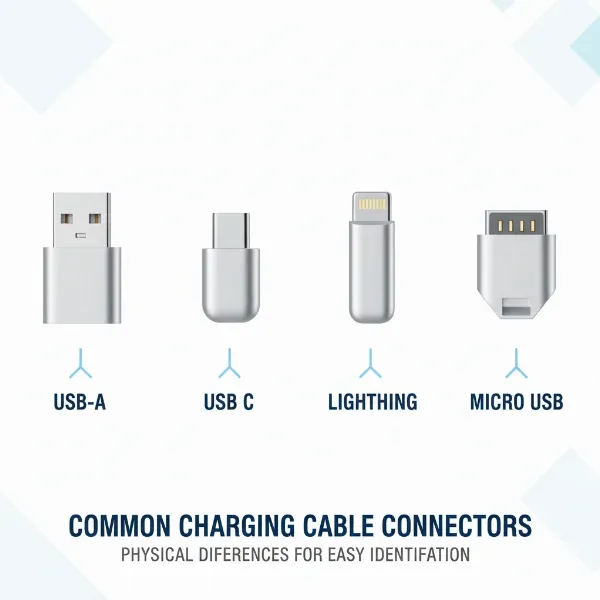
Currently, the market is dominated by a few key types of charging cables, each with its own set of advantages and limitations. USB-C has rapidly become the industry standard, lauded for its versatility and high performance, supporting fast charging for laptops, smartphones, and a growing array of peripherals. Lightning cables remain proprietary to Apple devices, offering a reliable connection for older iPhones and iPads. USB-A cables, while an older standard, are still widely used for connecting to power bricks, laptops, and older accessories. Lastly, Micro USB cables, though largely phased out in new devices, still serve older Android phones and various gadgets.
Each type offers different capabilities in terms of charging speed and data transfer. USB-C cables, especially those supporting Power Delivery (PD), can deliver significantly higher wattage, enabling rapid charging for power-hungry devices. Lightning cables also support fast charging, but typically at lower wattages. USB-A and Micro USB generally offer slower charging speeds. Selecting the right cable depends entirely on your device ecosystem and specific needs, making a universal understanding of each type incredibly valuable.
Key Factors When Choosing a Charging Cable
When you’re equipping your dorm room, a charging cable isn’t just about plugging in; it’s about performance, resilience, and safety. Given the unique challenges of dorm life—tight spaces, shared outlets, and constant movement—several factors become critical in your selection process. Paying attention to these details can save you from constant replacements and ensure your devices are always powered up and ready to go.
[image-1|dorm-room-charging-cable-durability|Close-up of a braided nylon charging cable, showing reinforced stress points and a sturdy connector, implying durability for dorm room use.|
A detailed close-up shot of a durable, braided nylon charging cable, highlighting the reinforced connectors and a flexible, tangle-resistant cord. The background is a slightly blurred dorm room desk with a laptop and smartphone, emphasizing its intended use. Soft, natural lighting from a window. Photographic style, sharp focus on the cable.]
Material and Durability of the Cable
The material of your charging cable directly impacts its lifespan, a crucial consideration in a busy dorm environment where cables often get tugged, bent, or stepped on. Common materials include PVC, TPE, and Nylon braiding.
- PVC (Polyvinyl Chloride): Often found in budget-friendly cables, PVC is flexible but can be prone to cracking and fraying over time, especially at the connector points.
- TPE (Thermoplastic Elastomer): A more premium rubber-like material, TPE cables offer better flexibility and a softer feel than PVC, making them more resistant to kinks.
- Nylon Braided: These cables are woven with tough nylon fibers around the internal wires, providing superior resistance to tangling, fraying, and general wear and tear. Brands like Anker and Native Union are known for their robust braided cables.
|
Our Picks for the Best Charging cable in 2026
As an Amazon Associate I earn from qualifying purchases.
|
||
| Num | Product | Action |
|---|---|---|
| 1 | Teeind USB Type C Cable Fast Charging, Tpc001 5 Pack(6Ft 3A) Braided C Charger Cables Compatible with Samsung S10e/note 9/s10/s9/s8 Plus/A80/A50/A20 |

|
| 2 | iPhone Charger 3 Pack 10 ft Apple MFi Certified Lightning Nylon Braided Cable Fast Charging Cord Compatible with iPhone 13 12 11 Pro Max XR XS X 8 7 6 Plus SE iPad and More |
|
| 3 | Anker USB C to USB C Cable, Type-C 60W Fast Charging Cable (6 FT, 2Pack) for iPhone 17 Series, iPad mini 6 and More (Black) |
|
| 4 | Anker Cable [2 Pack 6ft], USB A to USB C Cable for iPhone 17 Series,Samsung Galaxy S10 S10+, LG V30, Beats Fit Pro and More (Black). |
|
| 5 | USB Type-C to A Cable 5pack 6ft Braided Fast Charging 3A Quick Charger Cord, 6 Foot Compatible iPhone 17/17 Pro/16e/16/15 Pro Max,Samsung Galaxy S10 S9 S8 Plus, Note 10 9 8, LG V50 V40 G8 G7(Grey) |
|
| 6 | LISEN USB C to USB C Cable, 240W C to C Cable Fast Charging [6.6FT, 2 Pack] Type C Charger Fast Charging USBC to USBC Cable for iPhone 17 16 15 Pro Max iPad MacBook Neo Air Pro Samsung S26 S25 Ultra |
|
| 7 | AINOPE USB to USB C Cable [2-Pack, 6.6ft] 3.1A Type C Charger Fast Charging, Right Angle USB C Cable for iPhone 17 Carplay Cable, Galaxy S10+ S10 S9, Note 10 9, LG V30, Moto, iPhone 16 15 Charger Cord |
|
| 8 | INIU USB C to USB C Cable, 240W Fast Charging Type C Charger Cord, Braided USBC Phone Charger Cable for iPhone 17 16 Pro Max Samsung S26 S25 Laptops MacBook Air 15 M3 iPad Switch [6.6ft+6.6ft Black] |
|
| 9 | LISEN USB C to USB C Cable, 5-Pack [3.3/3.3/6.6/6.6/10FT] for iPhone 17 Charger Cord, 60W C to C Cable Fast Charging for iPad, iPhone 16 15 Pro Max, Galaxy S25/S24 USBC to USBC Cable Gifts for Men |
|
| 10 | Durcord USB C Cable, Upgarded 2Pack 10ft Fast USB Type C Charging Cable for Android/Phone/Pad/Laptop, Type C Charger Braided USB Cable Compatible withi Phone 17/16/15/Pro/Plus/Max/Sam.Sung-Silver |
|
To maximize your cable’s lifespan, always handle it gently, avoid sharp bends, and consider using cable ties or organizers to prevent tangling. Some cables also feature reinforced stress points at the connectors, which significantly reduces the likelihood of damage from bending.
Compatibility and Charging Speed
Choosing a charging cable means understanding what your devices require and how quickly you need them powered. First, identify the port types on your devices: are they USB-C, Lightning, or USB-A? Modern devices, especially laptops and newer smartphones (including the latest iPhones), predominantly use USB-C. Older iPhones and iPads typically use Lightning, while many accessories and older Android phones may still use Micro USB or require USB-A for the power source.
Next, consider charging speed. Look for cables that support fast charging standards like Quick Charge (QC) for Android devices or Power Delivery (PD) for USB-C compatible devices (including iPhones 8 and later when paired with a USB-C to Lightning cable and a suitable power adapter). USB-PD, in particular, can deliver significantly higher wattage (e.g., 60W, 100W, or even 240W) for rapid charging of laptops, tablets, and multiple devices simultaneously. To check if a cable supports fast charging, look for specifications like “PD compatible,” “Quick Charge,” or specific wattage ratings (e.g., “100W USB-C cable”) in the product description. The cable must also be paired with a compatible fast charger (wall adapter) to achieve these speeds.
Length and Design of the Cable
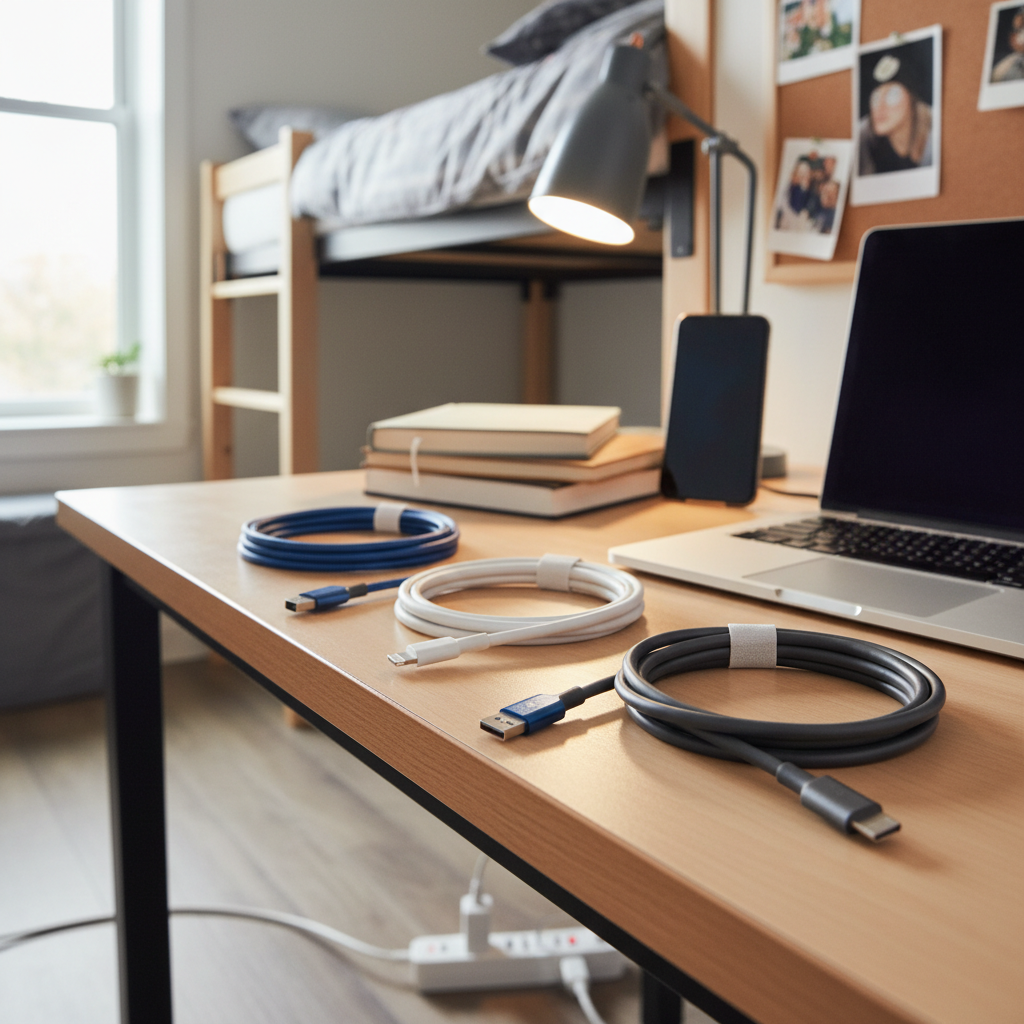
The length and design of your charging cable are surprisingly important for dorm room practicality. With outlets often located in inconvenient spots (behind beds, under desks, or across the room), a standard 3-foot cable might leave your device stranded.
- Length: For dorm rooms, cables between 6 to 10 feet (2 to 3 meters) are highly recommended. This extra length provides the flexibility to reach outlets from a top bunk, across a shared desk, or while relaxing on your bed, ensuring your device is always within reach. However, be mindful that excessively long cables can sometimes lead to slightly slower charging due to increased resistance, though for most modern cables, this impact is minimal.
- Design: Beyond length, consider design features that enhance usability and durability.
- Angled Connectors: Some cables feature 90-degree or angled connectors, which can be useful in tight spaces or when using your device horizontally while charging, reducing stress on the port and cable.
- Flat Cables: These are less prone to tangling than round cables and can be easier to route discreetly.
- LED Indicators: A small LED light on the connector can be a subtle but convenient feature, indicating when your device is charging.
- Magnetic Cables: While innovative, magnetic break-away cables might not be ideal for all dorm scenarios, as the magnetic connection can sometimes detach too easily.
Ultimately, the best length and design will depend on your specific dorm room layout and how you typically use your devices.
Comparing Popular Charging Cables in the Market
Navigating the world of charging cables can be complex due to the various types and their differing capabilities. Understanding the core distinctions between USB-A, USB-C, Lightning, and Micro USB is crucial for any student setting up their dorm room. This comparison will highlight the key characteristics of each, helping you decide which cables best suit your devices and lifestyle.
Detailed Comparison Table
| Feature | USB-A | USB-C | Lightning | Micro USB |
|---|---|---|---|---|
| Pros | Widespread compatibility (older devices) | Reversible, fast charging (PD), fast data transfer, universal standard | Reversible, Apple ecosystem integration | Common for older Android/accessories |
| Cons | Non-reversible, slower speeds, declining relevance | Can be more expensive, varying standards within USB-C | Proprietary (Apple only), typically lower max power | Non-reversible, less durable, slow speeds |
| Max Power Delivery | Up to 15W (standard) | Up to 240W (with USB-PD 3.1) | Up to 20-30W (for fast charging) | Up to 10W |
| Max Data Transfer | Up to 480 Mbps (USB 2.0), 5 Gbps (USB 3.0) | Up to 40 Gbps (USB4/Thunderbolt) | Up to 480 Mbps (USB 2.0), 5 Gbps (USB 3.0 on newer iPhones) | Up to 480 Mbps (USB 2.0) |
| Durability Factor | Varies by build, common fraying | Good (especially braided/reinforced) | Good (especially genuine Apple/certified) | Lower (port susceptible to damage) |
| Common Devices | Older phones, external hard drives, legacy chargers | Laptops, modern smartphones (Android/iPhone 15+), tablets, power banks | iPhones (pre-15), iPads, AirPods | Older Android phones, e-readers, Bluetooth speakers |
This table provides a snapshot, but remember that within each category, performance can vary based on the specific cable’s construction and quality. For dorm room use, USB-C cables offer the most future-proof and versatile solution due to their high power delivery and data transfer capabilities, making them ideal for a wide range of devices. Lightning cables remain essential for older Apple users, while USB-A still holds relevance for connecting to existing chargers and peripherals.
Detailed Charging Cable Buying Guide
Choosing the right charging cable for your dorm room can seem daunting, but by systematically evaluating your needs and focusing on quality and safety, you can make an excellent choice. This buying guide will walk you through the process, from understanding your personal usage patterns to identifying trustworthy brands and verifying essential safety certifications. A well-chosen cable will not only keep your devices charged but also enhance your overall dorm room experience.
[image-2|dorm-charging-cable-selection|A student in a dorm room looking at various charging cables, with emphasis on different lengths and connector types. The scene should convey thoughtful selection.|
A college student, mid-20s, with short hair, thoughtfully examining a selection of charging cables laid out on a clean dorm room desk. Cables of different lengths (a long one draped, a short one coiled) and connector types (USB-C, Lightning visible) are present. A textbook and a laptop are subtly in the background. Soft, bright lighting, slightly warm tones, realistic style, eye-level shot.]
Determine Your Needs
Before you even start looking at specific cables, take a moment to assess your personal charging landscape. This will narrow down your options significantly and ensure you buy exactly what you need.
- Which devices do you need a charging cable for? List them out. This will tell you the connector types required (USB-C, Lightning, USB-A). For example, if you have an iPhone 14 and an iPad Air, you’ll need Lightning and potentially USB-C. If you have a gaming laptop, you’ll likely need a high-wattage USB-C.
- Do you need fast charging capabilities? If you’re constantly on the go or have devices that support rapid charging (like modern smartphones or laptops), prioritize cables that support Power Delivery (PD) for USB-C or a suitable wattage for Lightning devices. If you only need to charge overnight, standard speeds might suffice.
- What length of cable is most practical for your dorm setup? Consider your bed’s height (especially if it’s a top bunk), the location of your outlets, and where you prefer to use your devices. As mentioned, 6 to 10-foot cables are often ideal for dorm rooms, offering much-needed flexibility.
- How many devices will you charge simultaneously? While a single cable charges one device, consider a multi-port charger if you need to power several devices and then pair it with appropriate cables.
“In a dorm, the right charging cable isn’t a luxury, it’s a necessity for staying connected, productive, and sane. Always prioritize length and durability for the challenging environment.” – Dr. Emily R. Chen, Tech Gadget Analyst
Research Reputable Brands
Investing in cables from well-known and respected brands often ensures better quality, performance, and safety. These manufacturers typically adhere to higher manufacturing standards and often provide warranties.
Some of the most recognized and reliable charging cable brands include:
- Anker: Widely regarded for its robust and durable cables (e.g., Powerline+ series) that often come with impressive warranties. They offer a wide range of USB-C, Lightning, and USB-A options.
- Aukey: Known for producing high-quality and affordable charging accessories, including durable cables that support fast charging standards.
- Belkin: A long-standing brand in connectivity, Belkin offers a range of reliable cables, including their BoostCharge series which supports high wattage Power Delivery.
- Native Union: Focuses on stylish, high-quality, and extremely durable braided cables, often with reinforced strain relief. They tend to be pricier but last longer.
- JSAUX: A popular brand, particularly for USB-C cables, offering good value with solid durability and fast charging capabilities, including longer lengths.
- Baseus: Offers innovative designs, such as angled USB-C cables, which can be particularly useful in tight dorm spaces.
When evaluating brands, look for positive customer reviews regarding longevity and performance, not just initial impressions. A strong warranty can also be a good indicator of a manufacturer’s confidence in their product.
Check Technical Specifications and Safety Certifications
The technical details and safety certifications are non-negotiable, especially in a shared living space like a dorm room where electrical safety is crucial.
- Safety Certifications: Always ensure your charging cable carries relevant safety certifications. For devices sold in the US, look for UL (Underwriters Laboratories) certification, which signifies rigorous safety testing. Other important global certifications include CE (Conformité Européenne), FCC (Federal Communications Commission), and RoHS (Restriction of Hazardous Substances) compliance. These certifications confirm that the cable meets strict safety standards, reducing risks like overheating, short-circuiting, or fire hazards. Avoid uncertified, generic cables, as they can pose significant risks.
- Technical Specifications:
- Voltage and Current (e.g., V/A): Ensure the cable’s voltage and current ratings (e.g., 5V/2A, 9V/3A, 20V/5A) match or exceed the requirements of your device and charger. Using an under-spec cable can lead to slow charging or even damage.
- Wattage (W): For fast charging, especially for laptops, look for cables with high wattage ratings (e.g., 60W, 100W, 240W). This indicates the maximum power the cable can safely transmit.
- Data Transfer Speed: If you frequently transfer large files, check for specifications like “USB 3.0,” “USB 3.1 Gen 2” (10 Gbps), or “USB4” (40 Gbps) for USB-C cables. Lightning cables typically operate at USB 2.0 speeds (480 Mbps), though newer iPhones can achieve faster speeds with compatible cables.
By meticulously checking these specifications and certifications, you can confidently select a charging cable that is both high-performing and safe for your dorm room setup.
Top Charging Cables for Dorm Rooms This Year
Selecting the ideal charging cable for a dorm room means balancing durability, length, charging speed, and compatibility. Based on current market trends and the specific needs of college students, here are some of the most favored charging cables that consistently receive high marks for their performance and resilience. These recommendations consider both functionality and the challenging environment of shared living spaces, offering reliable options across different budgets and device ecosystems.
- Anker Powerline III Flow USB-C to USB-C Cable (6ft/10ft): This cable is a standout for its exceptional durability and flexibility. Made with a soft silicone finish, it’s tangle-resistant and incredibly robust, designed to withstand frequent bending and rough handling. It supports up to 100W Power Delivery, making it perfect for fast-charging laptops, tablets, and smartphones. The longer versions are ideal for reaching distant outlets in dorm rooms.
- Belkin BoostCharge USB-C to USB-C (240W) Cable (6.6ft): For students with power-hungry devices, especially high-performance laptops, this Belkin cable is an excellent choice. It supports the highest USB Power Delivery charge rate available (240W), ensuring the fastest possible charging. Its quality braiding and reinforced overmolding promise significant durability, essential for preventing wear and tear in a dorm setting.
- JSAUX USB-C to USB-C 2-Pack (6.6ft/10ft): If you’re on a budget but still need high performance, the JSAUX two-pack offers fantastic value. These cables support 100W charging, making them nearly as good as premium options for fast charging. The longer 10-foot option is particularly beneficial for dorms, and getting two in a pack means you always have a spare.
- Native Union Belt Cable USB-A to Lightning (6.5ft/10ft): For Apple users who still rely on the Lightning port, Native Union offers a blend of style and extreme durability. Their braided cables are built to last, featuring reinforced stress points. The extra length is a major plus for dorms, and the integrated leather strap helps keep the cable tidy when not in use.
- Baseus Angled USB-C Charging Cable (6.6ft): This cable is designed with a flat-topped, angled USB-C connector, which can be incredibly useful in tight spots or for comfortable device use while charging, especially for gaming handhelds or phones. It supports up to 100W charging and features a flat braided cable for tangle resistance, making it practical for dorm room desks and beds.
- Anker Powerline+ II USB-A to Lightning Cable (6ft/10ft): For those needing a durable USB-A to Lightning connection, Anker’s Powerline+ II series is a top contender. With a hassle-free lifetime warranty and a heavy braided nylon outer shield, these cables are built to endure years of use. They may not offer the fastest charging, but their reliability is unmatched for legacy Apple devices.
When selecting from these top choices, consider your primary devices, the wattage they require, and the overall layout of your dorm room. Prioritizing durability and appropriate length will significantly enhance your charging experience and minimize the need for frequent replacements.
Conclusion
Navigating the demands of dorm life requires smart choices, and your charging cable is no exception. We’ve explored the diverse world of charging technologies, from the widespread utility of USB-C to the Apple-specific Lightning, alongside the foundational USB-A and Micro USB options. Key factors such as material durability (with braided nylon being a standout), compatibility with various fast-charging protocols like Power Delivery, and practical considerations like cable length (with 6-10 feet being ideal for dorms) are paramount for making an informed decision. Remember to always prioritize cables from reputable brands that boast essential safety certifications to ensure both efficiency and peace of mind.
By investing in a high-quality, durable charging cable tailored to your specific needs, you’re not just buying an accessory; you’re securing consistent power, protecting your devices, and streamlining your daily routine in a bustling dorm environment. Don’t let a flimsy cable disrupt your studies or social life. Which charging cable feature do you think is most critical for a busy college student?
Frequently Asked Questions
What makes a charging cable “dorm-room friendly”?
A dorm-room friendly charging cable is typically long (6-10 feet) to reach distant outlets, highly durable (often braided nylon with reinforced connectors) to withstand frequent use and potential mishandling in tight spaces, supports fast charging for various devices, and comes from a reputable brand with safety certifications.
Can I use a regular phone charging cable for my laptop in a dorm?
It depends on your laptop. Many modern laptops, especially thinner models, charge via USB-C using the Power Delivery (PD) standard. If your phone cable is USB-C to USB-C and supports high wattage (e.g., 60W or 100W PD), it might work. However, standard phone cables often have lower wattage limits and won’t charge a laptop efficiently, if at all. Always check your laptop’s power requirements.
Why are long charging cables recommended for dorm rooms?
Long charging cables are recommended for dorm rooms because outlets can be scarce and located inconveniently (e.g., behind furniture, under beds, or far from your desk/bed). A 6 to 10-foot cable provides the flexibility to comfortably use your device while it charges, whether you’re on a top bunk, at your desk, or relaxing on your bed.
What are the dangers of using cheap, uncertified charging cables?
Cheap, uncertified charging cables can pose several dangers, including overheating, short-circuiting, fire hazards, and potential damage to your devices. They often use substandard materials and lack the internal safety mechanisms found in certified cables, making them a risk in any environment, especially shared living spaces like dorms.
How can I make my charging cable last longer in a dorm?
To make your charging cable last longer, avoid sharp bends, especially at the connector points. Store it neatly using cable ties or organizers to prevent tangling. Avoid running it under rugs or furniture where it can be pinched or damaged. Always unplug by gripping the connector, not by pulling the cable itself. Consider cables with braided exteriors and reinforced stress points for added durability.